7 Best Rice Cookers (October 2026)
The best best rice cookers include the Zojirushi 3-Cup Micom Rice Cooker for small households, the Zojirushi NS-ZCC10 Neuro Fuzzy Rice Cooker for varied rice meals, and the Zojirushi Neuro Fuzzy 10-Cup Rice Cooker for flexible serving times.
On this page (8 sections)
- Which rice cooker is best for your kitchen?
- The best rice cookers by use
- How do you choose the best rice cooker size?
- Which rice settings will you actually use?
- How should you set up and use a rice cooker?
- How do you clean a rice cooker without damaging it?
- Which common rice cooker mistakes should you avoid?
- Which rice cooker should you choose?
The best rice cooker for small households is the Zojirushi 3-Cup Micom, because it handles small portions and offers dedicated grain settings. Choose the NS-ZCC10 instead when your everyday meals need more rice or a broader menu.
Start with the amount you cook on a normal weeknight, rather than the biggest gathering you might host. A cooker that fits your daily routine is more useful than one chosen for an occasional full pot.
Our guide to fuzzy logic rice cookers introduces the category, while the complete fuzzy logic buying guide explains automatic cooking adjustments. Compare focused options in our best fuzzy logic rice cookers roundup and rice cooker brand comparison.
Our picks at a glance
-
1

-
2
 Best for varied rice meals
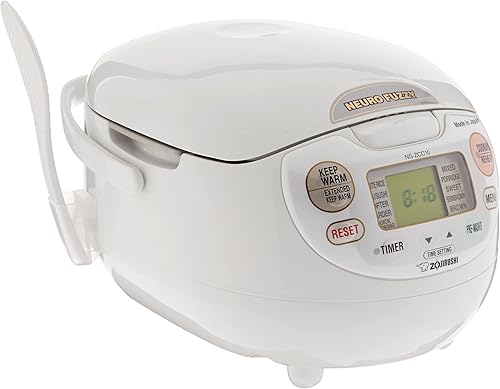
Zojirushi NS-ZCC10 Neuro Fuzzy Rice Cooker
8.9/10 our score
See it on Amazon -
3
 Best for flexible serving times
Zojirushi Neuro Fuzzy 10-Cup Rice Cooker
8.7/10 our score
See it on Amazon
- 4
 Check it
Zojirushi NS-TSC10 Micom Rice Cooker
Best for rice and vegetables - 5
 Check it
Toshiba Mini 3-Cup Rice Cooker
Best for compact meal prep - 6
 Check it
Cuckoo CR-0675F 12-Cup Fuzzy Logic Rice Cooker
Best for busy family dinners - 7
 Check it
Cuckoo CR-0632F 12-Cup Rice Cooker
Best for multigrain family meals
Which rice cooker is best for your kitchen?
Choose the compact Zojirushi for small portions, the NS-ZCC10 for varied rice meals, or the NS-TSC10 when you'll use its steaming basket. The Cuckoo models offer clearly stated family-size capacities, while Toshiba combines small batches with several cooking uses.
We compared batch sizes, menus, serving functions and cleaning access. The order reflects those features and their fit for everyday rice cooking, so the highest-scoring model isn't automatically the right size for every household.
| Product | Best for | Capacity | Smallest batch | Special settings | Our score |
|---|---|---|---|---|---|
| Zojirushi 3-Cup Micom Rice Cooker | small households | 3 cups | 1/2 cup | Brown or GABA Brown, long-grain white, steel-cut oatmeal | 9.1 |
| Zojirushi NS-ZCC10 Neuro Fuzzy Rice Cooker | varied rice meals | 5.5 cups uncooked | 8.9 | ||
| Zojirushi Neuro Fuzzy 10-Cup Rice Cooker | flexible serving times | Porridge, sweet, semi-brown, brown, rinse-free and sushi rice | 8.7 | ||
| Zojirushi NS-TSC10 Micom Rice Cooker | rice and vegetables | 5.5 cups uncooked | 8.6 | ||
| Toshiba Mini 3-Cup Rice Cooker | compact meal prep | 3 cups uncooked | 8.5 | ||
| Cuckoo CR-0675F 12-Cup Fuzzy Logic Rice Cooker | busy family dinners | 6 cups uncooked, 12 cups cooked | 8.4 | ||
| Cuckoo CR-0632F 12-Cup Rice Cooker | multigrain family meals | 6 cups uncooked, 12 cups cooked | 8.3 |
The best rice cookers by use
The right pick matches both your portions and your usual meals. Each cooker below has a clear role, along with a reason to choose another model.
Zojirushi 3-Cup Micom Rice Cooker
- Cooks as little as 1/2 cup of rice or oats
- Brown or GABA Brown setting
- Long-grain white setting
- Fold-down handle and retractable cord
Choose this compact Zojirushi for small, fresh batches and a routine built around rice or oatmeal. Its separate grain settings make more sense than extra capacity you'll rarely use.
Pros
- Supports half-cup batches
- Dedicated long-grain white and steel-cut oatmeal settings
- Handle and retractable cord simplify storage
Cons
- Limited room for larger gatherings
- Inner pot needs hand washing
Zojirushi 3-Cup Micom: best rice cooker for small households
Choose this Zojirushi if you cook for yourself or a couple and prefer fresh rice to planned leftovers. Its half-cup minimum batch is the strongest reason to choose it over a larger cooker.
The separate long-grain white program suits a kitchen that often serves basmati or jasmine alongside short- or medium-grain rice. Select the program for the grain you're using, rather than leaving the cooker on one familiar setting.
A steel-cut oatmeal menu also makes sense if breakfast would give the appliance another regular job. The Brown and GABA Brown options suit a different routine, but the GABA cycle includes a lengthy activation stage, so it needs advance planning.
The fold-down handle and retractable cord help if you put the cooker away between meals. Our Zojirushi 3-cup Micom review takes a closer look at that small-household fit.
Skip it for frequent group meals or when you want enough rice for several days at once. A bigger cooker is more practical than running consecutive batches.
Zojirushi NS-ZCC10 Neuro Fuzzy Rice Cooker
- 5.5-cup uncooked capacity
- White rice texture choices
- Automatic and extended keep-warm
- Two delay timer settings
The NS-ZCC10 suits households that switch between rice types and want control over white rice texture. Its mid-size capacity offers more room than a compact cooker.
Pros
- White rice options include softer and harder textures
- Broad range of rice menus
- Detachable washable inner lid
Cons
- Needs more counter space than the compact Zojirushi
- Extra menus offer little value for an occasional plain-rice meal
Zojirushi NS-ZCC10 Neuro Fuzzy Rice Cooker
Choose the NS-ZCC10 if your meals rotate between plain white rice, sushi-style rice, brown rice and mixed rice. Its 5.5-cup uncooked capacity gives a household more room without making the largest model the default.
The white rice menu includes softer and harder choices, useful when people prefer different textures. Start with the normal choice, then change one setting at a time so you can tell what improved the result.
Automatic and extended keep-warm, a reheat cycle and 2 delay settings provide several ways to manage serving time. These functions matter most when rice is ready before the rest of dinner or household members eat at different times.
The detachable washable inner lid is another practical detail for frequent use. Rice starch and condensation reach beyond the bowl, so access to that surface matters.
Skip it if you usually make tiny portions or only want occasional plain rice. For help judging its controls against other models, read our Micom vs Neuro Fuzzy comparison.
Zojirushi Neuro Fuzzy 10-Cup Rice Cooker
- Neuro Fuzzy cooking adjustments
- Automatic and extended keep-warm
- Two delay start options
- Detachable inner lid
The NS-ZCC18 suits cooks who want rice menus, delayed starts and flexible serving options. Confirm its uncooked capacity before buying it specifically for larger batches.
Pros
- Automatic and extended keep-warm
- Stay-cool inner-pan handles
- Detachable inner lid and retractable cord
Cons
- Larger footprint than the NS-ZCC10
- Cooked and uncooked capacity descriptions conflict
Zojirushi Neuro Fuzzy 10-Cup Rice Cooker
Choose the NS-ZCC18 if you want Neuro Fuzzy controls with delayed starts and flexible serving options, and you have room for its larger body. Stay-cool inner-pan handles also help when removing the pot as directed.
Its menus cover white, brown, rinse-free and sushi rice, plus porridge and other rice styles. The automatic cooking adjustments are useful for that variety, though correct measuring still matters.
Confirm the uncooked capacity before ordering for larger batches. The supplied capacity descriptions conflict about cooked versus uncooked quantities, so the product name alone isn't a sound basis for planning servings.
This cooker measures 14.25 inches deep, 11.13 inches wide and 9.5 inches high. Allow extra room for opening the lid and releasing steam, rather than measuring only the closed body.
The detachable inner lid, fold-down handle and retractable cord support cleaning and storage. Skip it for a tight counter or uncertain batch requirements; choose a model with a clearly stated capacity that fits your meals.
Zojirushi NS-TSC10 Micom Rice Cooker
- Up to 5.5 cups uncooked
- Steam menu and steaming basket
- Automatic and extended keep-warm
- Reheat cycle
Choose the NS-TSC10 when a Steam menu and included basket would earn regular use. Its mid-size rice capacity and serving functions suit everyday meal preparation.
Pros
- Includes a steaming basket
- Reheat and extended keep-warm functions
- Clear-coated stainless steel exterior
Cons
- 14-inch depth needs counter planning
- Inner pot needs hand washing
Zojirushi NS-TSC10 Micom Rice Cooker
Choose the NS-TSC10 when you want a rice cooker that can also handle a separate steaming task. The Steam menu and included basket give it a clear purpose beyond making a pot of rice.
Think about how you would use that basket during an ordinary week. Vegetables or another suitable food prepared according to the manual can justify the extra function, while an unused basket adds little value.
Don't assume every steaming recipe can run alongside a full batch of rice. Basket loading, water amounts and cooking times need to follow this model's directions.
Its 5.5-cup uncooked capacity, reheat cycle and serving functions fit everyday family meals. The clear-coated stainless steel exterior can be wiped clean, while the inner pot requires hand washing.
Skip it if steaming isn't part of your routine and rice texture menus matter more. Our NS-TSC10 vs NS-ZCC10 comparison helps you decide which feature set deserves the counter space.
Toshiba Mini 3-Cup Rice Cooker
- 3-cup uncooked capacity
- Rice and mixed-grain programs
- 24-hour delay timer
- Removable steam valve
This Toshiba suits small households that want to use one cooker for rice, grains and other meals. Its compact capacity makes more sense for modest portions than group cooking.
Pros
- Menus extend beyond rice
- Keep-warm and reheat functions
- Removable steam valve and vent cap
Cons
- Small capacity limits group meals
- Nonstick pot requires gentle hand washing
Toshiba Mini 3-Cup Rice Cooker
Choose the Toshiba Mini for modest portions and a meal plan that includes grains, porridge or slow-cooked dishes. Its 3-cup uncooked capacity fits a small household better than regular group cooking.
White rice, quick cook, brown rice and mixed grain are among its programs. Start with the dish you'll make most often, then learn the other functions using recipes and quantities intended for this cooker.
The 24-hour delay timer offers scheduling room, but it doesn't make every ingredient suitable for a delayed start. Follow the manual's ingredient limits instead of leaving a prepared meal waiting simply because the timer allows it.
A large LED display provides the programming interface, while the removable steam valve and vent cap give access for cleaning. Hand wash the nonstick pot with mild soap and a soft cloth.
Skip it if you routinely want dinner plus several leftover portions. Choose the compact Zojirushi instead when its confirmed small-batch minimum and specific grain programs better match your routine.
Cuckoo CR-0675F 12-Cup Fuzzy Logic Rice Cooker
- 12 cups cooked capacity
- Quick white rice function
- Self-clean setting
- Removable lid
Choose this Cuckoo for family-size batches and a dedicated quick white rice option. A timer and warming mode help fit the rice around the rest of dinner.
Pros
- Room for family meals and gatherings
- Dedicated quick white rice program
- Self-clean setting and removable lid
Cons
- More capacity than many solo cooks need
- Self-clean function does not replace hand washing
Cuckoo CR-0675F 12-Cup Fuzzy Logic Rice Cooker
Choose this Cuckoo for family dinners when you need a larger pot and a quick white rice option. The 6-cup uncooked capacity produces up to 12 cups cooked, giving you a clear basis for comparing batch sizes.
The exact model number is CR-0675FG. Cuckoo gives a 28–36 minute range for its quick white rice program, which makes that function worth considering when dinner timing is tight.
Treat that range as specific to the quick white rice program. Brown rice, oats and other menu choices need their own directions and won't necessarily follow the same schedule.
The self-clean setting is useful as part of care, but the pot and other removable parts still need cleaning as directed. Check the lid and steam path rather than assuming a cleaning cycle removes every trace of starch.
Skip it if your normal batch is very small and larger meals are rare. For more options from the brand, see our Cuckoo rice cooker roundup.
Cuckoo CR-0632F 12-Cup Rice Cooker
- 12 cups cooked capacity
- GABA and multigrain or brown rice menus
- Slow cook, reheat and multi-cook
- Excess-water drainage tray
This Cuckoo suits households that make multigrain rice and want slow-cook or multi-cook options too. Its removable inner lid and drainage tray make those cleanup points accessible.
Pros
- Dedicated GABA and multigrain options
- Slow-cook and multi-cook functions
- Detachable inner lid
Cons
- Family-size capacity may be unnecessary for small meals
- Drainage tray adds a part to clean
Cuckoo CR-0632F 12-Cup Rice Cooker
Choose the CR-0632F when multigrain rice is a regular family meal and you also want slow-cook or multi-cook options. Its GABA and multigrain or brown rice menus make those uses central to the decision.
Like the other Cuckoo here, it holds 6 cups uncooked or 12 cups cooked. Choose between them around the functions you'll use, rather than expecting the same capacity to settle the choice.
Mixed grains can have different soaking and water needs, so follow a recipe intended for the chosen menu. Combining grains at random and selecting white rice is a poor starting point.
The detachable inner lid and excess-water drainage tray give you access to common cleanup areas. Empty and clean the tray as directed instead of letting collected moisture sit between meals.
Skip it if you mainly want quick plain white rice and won't use the broader menus. Our Zojirushi vs Cuckoo comparison helps you compare the brands around your actual cooking habits.
How do you choose the best rice cooker size?
Choose a cooker around your usual uncooked batch, with room for larger meals you make regularly. Household size is a starting point, but rice as a main dish needs a different amount from rice served beside several other foods.
Measure the rice you already cook
Use your current meals to estimate demand before shopping. Note how much dry rice feeds everyone comfortably and how much remains afterward.
Include leftovers only if you want them. Buying a larger cooker to avoid an occasional second batch can make sense, but regularly cooking surplus rice creates another storage task.
Our rice cooker size guide helps you work through portions without treating every family meal as the same size.
Compare uncooked capacity with uncooked capacity
A cooked-cup number looks larger because rice expands during cooking. Comparing it directly with another model's uncooked capacity can make similar-size cookers seem very different.
Also check the limits for the dish you plan to make. Porridge, mixed rice and other programs can have lower maximum quantities than plain white rice.
Check the minimum as well as the maximum
A large maximum doesn't tell you how well the cooker fits a tiny dinner. Follow the manual's minimum batch rather than assuming any pot can handle a few spoonfuls.
The compact Zojirushi has a stated minimum that makes its small-household role clear. For other models, confirm the minimum for your chosen grain before planning very small meals.
Which rice settings will you actually use?
Prioritize programs for the rice you eat each week. Extra functions earn their place when they replace a real cooking task, rather than adding menu choices you rarely select.
Match the program to the grain
Brown rice usually needs more time than white rice because its outer layers slow water absorption. A dedicated brown rice program is useful if that grain appears often in your meals.
Long-grain white rice and short-grain rice can also call for different methods. Use the matching program and water marks where provided, then adjust future batches within the manual's guidance.
For sushi-style rice, cooking is only part of the job. The best rice cookers for sushi rice guide helps you focus on suitable menus, while seasoning and handling remain separate steps after cooking.
Choose useful control over a long menu
A softer or harder white rice choice may matter more than several programs for dishes you never make. Think about the result you want to change before choosing the control that promises to change it.
Fuzzy logic adjusts the cooking process, but it can't correct every measuring error. Too much water, an overloaded bowl or the wrong program can still leave you with disappointing rice.
Separate convenience from cooking speed
A delay timer schedules when rice is ready; it doesn't shorten the cooking cycle. Keep-warm serves another purpose by maintaining cooked rice for serving within the model's instructions.
A quick program can help on a busy evening, but it isn't a universal shortcut for every grain. Use it for the rice types and quantities the manual allows.
How should you set up and use a rice cooker?
Start with the supplied cup, the correct water marks and the matching menu. Keeping those steps consistent makes it easier to improve texture without guessing what went wrong.
Place the cooker where steam can escape
Set it on a stable, level surface with clearance around the steam outlet. Avoid trapping steam beneath a low cabinet, and keep the cord away from hot surfaces and counter edges.
Make sure you can open the lid fully without moving a hot cooker. A body that fits on the counter may still be awkward if the lid hits a shelf.
Measure rice and water as a matched system
Use the included rice-measuring cup rather than swapping in a standard kitchen cup. The bowl's water marks are intended to work with the model's measuring method.
For programs that use those marks, add the measured rice first and fill to the correct line. Don't add a separate generic water ratio on top of the marked amount.
Rinse rice when its package and the cooker instructions call for it. A separate bowl can help protect a nonstick pot from wear during washing.
Make your first batch simple
Begin with plain rice at a permitted batch size, without added vegetables, sauces or other ingredients. That gives you a useful starting point for learning the controls and your preferred texture.
Dry the outside of the inner pot and check that the heating area is free of stray grains before inserting it. A clean contact surface helps the pot sit correctly.
Let the full cycle finish, including any rest stage built into the program. Fluff gently with a suitable rice paddle, keeping your face and hands clear of escaping steam.
Change one thing at a time
If the rice is too firm or soft, record the grain, quantity, menu and water amount. Make one small permitted adjustment on the next batch instead of changing everything at once.
Different rice brands and storage conditions can affect water needs. Consistent measuring matters more than assuming one ratio will suit every bag.
How do you clean a rice cooker without damaging it?
Use gentle hand washing and regular lid care, following the instructions for each removable part. A clean bowl alone doesn't address starch or moisture around the steam path.
Protect the nonstick surface
Unplug the cooker and let it cool before cleaning. Use mild soap and a soft sponge or cloth, avoiding steel wool, abrasive pads and metal tools.
Don't use the inner pot as a place to scrape stuck food with a fork. If rice sticks, loosen it with water as the care instructions allow instead of forcing it off.
Clean the lid and moisture collection areas
Remove washable lids, valves or caps only as directed, then reassemble them correctly before the next cycle. A loose or missing part can affect normal operation.
Empty drainage or condensation containers where fitted. Wipe the body with a damp cloth and keep the electrical base out of water.
Our rice cooker cleaning guide walks through the care routine in more detail.
Plan leftovers before starting a large batch
Keep-warm isn't a substitute for deciding what you'll eat and what you'll store. Follow the cooker's holding instructions and the food-storage guidance that applies to your meal.
If you want rice for later meals, arrange suitable storage instead of leaving the whole batch in the cooker by default. A larger capacity is most useful when you have a clear plan for the extra food.
Which common rice cooker mistakes should you avoid?
Avoid mismatched measurements, blocked steam outlets and the wrong menu. These mistakes can undermine a suitable cooker and are easier to prevent than to correct after cooking.
- Mixing cup sizes: Keep the supplied rice cup with the cooker so another household member doesn't unknowingly use a different measure.
- Filling to the wrong line: Match the water scale to the grain and program, especially when the bowl has several sets of marks.
- Ignoring menu limits: A maximum for white rice may not apply to porridge or mixed dishes.
- Opening the lid repeatedly: Let the cycle run without releasing heat and steam unless the instructions require it.
- Adding ingredients without a recipe: Follow approved quantities and directions for mixed dishes instead of treating the pot like an open saucepan.
- Leaving cleanup until residue hardens: Clean cooled removable parts after use so starch doesn't build up around the lid or valve.
If dinner timing is your main problem, learn the timer before relying on it for a busy day. Practice setting the intended finish time with a simple permitted recipe.
Which rice cooker should you choose?
Choose the best rice cooker for your normal batch first, then use menus and convenience functions to break a tie. A larger pot or longer feature list won't help if it doesn't match your meals.
Pick the compact Zojirushi for small fresh portions and its dedicated grain programs. Move to the NS-ZCC10 when you need more everyday capacity and want choices for rice type and texture.
Choose the NS-TSC10 if its steaming basket would get regular use, or Toshiba for small batches and broader meal preparation. Consider the NS-ZCC18 only after confirming the capacity you need.
For family-size Cuckoo batches, choose the CR-0675FG around quick white rice and the CR-0632F around multigrain and broader cooking menus. If you're still weighing the counter space, our rice cooker value guide helps you decide how often you'd use one.
Our top 3 picks at a glance
-
1
-
2
Best for varied rice meals
Zojirushi NS-ZCC10 Neuro Fuzzy Rice Cooker
8.9/10 our score
See it on Amazon -
3
Best for flexible serving times
Zojirushi Neuro Fuzzy 10-Cup Rice Cooker
8.7/10 our score
See it on Amazon
Frequently asked questions
What is the best rice cooker for most people?
The best rice cooker here for small households is the Zojirushi 3-Cup Micom, which supports half-cup batches and has dedicated grain settings. Choose the NS-ZCC10 instead if your regular meals need more capacity or you want white rice texture choices and a wider range of rice menus.
How do I choose the right rice cooker size?
Choose capacity around your normal batch, then allow room for the larger meals you make often. Compare uncooked quantities with uncooked quantities, since cooked rice takes up more space.
Our rice cooker size guide helps you match batch size to your household and serving habits.
Is fuzzy logic worth choosing in a rice cooker?
Fuzzy logic is useful when you want the cooker to adjust heat and cooking time rather than follow one fixed cycle. It still needs the right rice measurement, water level and menu.
Read what fuzzy logic means in a rice cooker before paying extra for the feature alone.
Can one rice cooker handle brown and white rice?
Yes, several picks have separate menus for white and brown rice, including the NS-ZCC10, Toshiba Mini and Cuckoo CR-0632F. Use the matching water marks and program rather than treating both grains alike, since brown rice generally needs a different cooking cycle and more time than white rice.
Should I choose a rice cooker or an Instant Pot?
Choose a rice cooker when rice is a frequent part of dinner and you value dedicated grain menus or flexible serving functions. Consider a multicooker if you need one appliance for several other cooking jobs.
Our rice cooker vs Instant Pot comparison explains how to match that choice to your meals.


