How to Choose a Rice Cooker: Size, Pot and Settings
The key to how to choose a rice cooker is to match its uncooked capacity to your usual batch, then check rice settings, pot care and counter space. Compare cooked and uncooked capacity carefully, and check the minimum batch before buying a larger model.
On this page (10 sections)
- How do you choose the right rice cooker size?
- What should you check about the inner pot?
- Which rice cooker settings are worth paying for?
- Does fuzzy logic matter for your cooking?
- Four rice cookers for different batch sizes and routines
- How to choose a rice cooker that fits your kitchen
- How should you set up and use a new rice cooker?
- How do you keep a rice cooker easy to clean?
- Which rice cooker buying mistakes should you avoid?
- Which rice cooker should you choose?
To choose a rice cooker, start with your usual batch size, then match the rice programs, pot care and footprint to your routine. Learning how to choose a rice cooker becomes easier once you know how much rice you need and which jobs you want it to handle.
A person making rice for 2 dinners needs a different capacity from someone preparing several meals at once. Count portions and planned leftovers before comparing buttons or brand names.
If family size is your main concern, see our guide to what size rice cooker you need. For a feature overview, read what fuzzy logic means in a rice cooker.
How do you choose the right rice cooker size?
Choose capacity for the largest batch you make regularly, while checking that the cooker can handle your smallest batch. An occasional gathering shouldn't decide the size of an appliance you use for everyday meals.
How to choose a rice cooker capacity for your meals
Measure the dry rice you normally prepare before deciding on a capacity. If you usually cook on the stove, record that amount across a few meals, including any rice you deliberately save.
Then compare each cooker's capacity using the same unit. A figure for cooked rice describes the finished food, while an uncooked figure describes how much dry rice goes into the pot.
| Example | Capacity information supplied | Routine to consider |
|---|---|---|
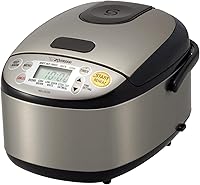
| Zojirushi Neuro Fuzzy 10-Cup Rice Cooker | Described as holding up to 10 cups cooked | Rice variety and flexible meal timing |
| Toshiba Mini 3-Cup Rice Cooker | 3 cups uncooked; up to 6 cups cooked | Smaller households with varied meals |
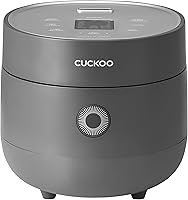
| Cuckoo CR-0675F 12-Cup Fuzzy Logic Rice Cooker | 6 cups uncooked; 12 cups cooked | Regular larger batches |
| Cuckoo CR-0375F 6-Cup Fuzzy Logic Rice Cooker | 3 cups uncooked; 6 cups cooked | Smaller batches with grain programs |
The Zojirushi's capacity wording needs extra care because its name and capacity descriptions don't establish a consistent measurement basis. Confirm the uncooked limit in the exact model's manual before using its cup figure to compare sizes.
Rice cooker cups also aren't necessarily the same size as a standard kitchen measuring cup. Use the supplied measure with the matching water lines, and keep it with the cooker.
Allow for how you serve rice, too. Rice as the main part of a bowl meal calls for more than rice served beside several other dishes.
What should you check about the inner pot?
Check washing requirements, handling and replacement options before choosing a pot. These details affect every batch, from lifting the pot to cleaning away starch after dinner.
Nonstick surfaces can make serving and cleanup easier, but they need suitable utensils and gentle washing. Choose a rice paddle approved for the surface rather than scraping rice out with metal cutlery.
The Toshiba and both Cuckoo examples have nonstick pots that call for hand washing. If you depend on dishwasher cleanup, that care requirement should affect your decision before extra cooking modes do.
Pot handles matter when you move a warm pot to serve or clean it. The Zojirushi's spherical inner pan has stay-cool side handles, giving you grips at the sides rather than only the rim.
Check whether you can obtain a replacement pot for the exact model. A close-looking pot isn't a safe substitute because fit affects contact with the cooker's heating surface.
Which rice cooker settings are worth paying for?
Prioritize programs for the rice you eat each week, then add timing features that solve a real meal problem. A long menu is useful only when its programs match your food.
For mostly white rice, begin with the standard white-rice cycle. Brown rice, porridge and mixed-grain programs deserve more weight when those foods are part of your routine.
A sushi setting doesn't season rice for you. You'll still need suitable rice and the seasoning steps for your recipe.
Quick modes help when dinner starts late, but don't assume they suit every grain or batch size. Check the manual for supported amounts and any changes to water measurements.
Keep-warm helps when people eat at different times, while a delay timer helps you plan a finish time. Check whether the timer means “ready at” or “start after,” since confusing those can shift dinner.
For more on automatic programs, our fuzzy logic rice cooker guide explains the basic idea.
Does fuzzy logic matter for your cooking?
Choose fuzzy logic if you want automatic adjustments to cooking time or temperature. It is especially relevant when you switch between supported rice programs instead of repeating one fixed routine.
All 4 examples here include fuzzy logic or Neuro Fuzzy controls. That means capacity, menu choices and cleaning needs will do more to separate these particular options.
Automatic adjustments don't replace correct measuring. Too much water, an unsuitable program or a batch outside the supported range can still leave you with a result you don't want.
For a closer look at two named Zojirushi approaches, see Micom vs Neuro Fuzzy. Compare the whole cooker rather than choosing on the control-system name alone.
Four rice cookers for different batch sizes and routines
Choose the Toshiba or smaller Cuckoo for modest batches, and consider the larger Cuckoo when you regularly need more rice. The Zojirushi deserves attention if its rice menu and meal-timing features match your habits.
Zojirushi Neuro Fuzzy 10-Cup Rice Cooker: for varied rice meals
Choose the Zojirushi if you regularly change rice types and want several ways to manage serving time. Its menu covers white, brown, rinse-free, sushi, sweet and semi-brown rice, plus porridge.
Automatic and extended keep-warm modes suit a household where dinner doesn't happen at one fixed moment. Follow Zojirushi's instructions for which foods can stay warm and for how long.
The detachable inner lid gives you access for washing away starchy residue. A retractable cord and fold-down handle also help if you put the cooker away between meals.
Its dimensions are 14.25 in deep, 11.13 in wide and 9.5 in high. Measure the full depth as well as the space needed to open the lid.
Skip it if you mainly want a small white-rice cooker and won't use the broader menu. Resolve the capacity wording before choosing it for a specific batch requirement.
Toshiba Mini 3-Cup Rice Cooker: for small households with varied menus
Choose the Toshiba if you cook for 1 to 3 people and want to make more than plain rice. Its smaller capacity suits modest meals without committing to a larger batch cooker.
Alongside those programs, its menu includes quick cook, slow cook, cake and egg. These options suit someone who plans to use one appliance for several small meal tasks.
A delay timer reaches up to 24 hours ahead, and the cooker has keep-warm/reheat controls. Use delayed cooking only for ingredients and waiting periods permitted in the manual.
The steam valve and vent cap come off for cleaning, while Toshiba recommends mild soap and a soft cloth for the pot. Its body measures 9 in deep, 11.6 in wide and 8 in high.
Skip it if you regularly need larger batches or want to put the pot in the dishwasher. For porridge and other expanding foods, follow the program's own fill limit rather than the rice maximum.
Cuckoo CR-0675F 12-Cup Fuzzy Logic Rice Cooker: for regular batch cooking
Choose the larger Cuckoo if you regularly prepare rice for several meals or serve a larger group. Its capacity makes more sense when those bigger batches are routine rather than rare.
Its cooking options include glutinous white rice, brown rice, oats and baby food. The timer and warming mode help you work rice into a meal with other dishes.
The nonstick pot, removable lid and self-clean setting give you several ways to deal with residue. The automatic cleaning cycle still needs to be paired with washing the removable parts as directed.
It measures 12.7 in deep, 9.37 in wide and 8.5 in high. That makes counter depth worth checking even if its width fits comfortably.
Skip it if most meals need only a small amount of rice and the manual's minimum batch doesn't fit that amount. Don't buy extra capacity without checking this lower limit.
Cuckoo CR-0375F 6-Cup Fuzzy Logic Rice Cooker: for smaller grain batches
Choose the smaller Cuckoo if modest rice batches and dedicated grain programs fit your meals. Its menu includes white rice, brown rice, quinoa, multigrain and oatmeal.
Quick cooking, keep-warm and a preset timer cover common timing needs. They are useful additions if you often plan breakfast grains or need rice ready alongside dinner.
The cooker also has a nonstick pot, removable lid and self-clean setting. Hand washing remains part of routine care, so include that work in your choice.
Its dimensions are 8.6 in deep, 11.5 in wide and 7.9 in high. Compare the shape with your available space rather than assuming smaller capacity means less width.
Skip it if you often cook beyond its batch limit or want one large pot for gatherings. The larger Cuckoo is the more suitable starting point for that routine.
How to choose a rice cooker that fits your kitchen
Measure the working space around the cooker, including room for the lid, steam and serving. Closed dimensions alone won't show whether it fits under a low cabinet.
Put the cooker on a stable, level surface where steam can escape as its instructions require. Avoid a position that directs steam into the underside of a cabinet or toward someone reaching past it.
Check the route to the outlet before buying. All 4 examples are intended for 120-volt use, so make sure the appliance suits your local electrical supply.
If you store it after each meal, check its weight and the shelf opening. You need enough room to lift it out without tipping the pot or catching the lid.
For broader comparisons, our best rice cookers guide covers the category. Read rice cooker vs Instant Pot if one appliance also needs to handle other main cooking jobs.
How should you set up and use a new rice cooker?
Start with the manual's basic rice method and change only one thing at a time as you learn your preferred texture. Keep the supplied cup and paddle nearby so your measurements stay consistent.
- Remove packaging and wash the permitted removable parts before first use.
- Measure dry rice with the supplied cup and rinse as directed for that rice.
- Drain, then add water using the correct program's markings or instructions.
- Dry the outside and bottom of the pot before placing it in the cooker.
- Select the matching rice program and close the lid as directed.
- Follow any resting instructions, then fluff gently with a suitable paddle.
Don't assume a stovetop water ratio will work unchanged. A cooker's marked lines account for its intended method, so use those as your starting point.
If the rice is too soft or firm, note the rice type, amount, program and water used. Adjust water slightly on the next batch rather than changing the rice, mode and measurement together.
Keep the lid closed during cooking unless the recipe directs otherwise. Opening it releases heat and steam and makes it harder to judge a consistent method.
How do you keep a rice cooker easy to clean?
Clean the pot, lid parts and steam path regularly, following the model's instructions. Starch can collect beyond the inner pot even when the rice comes out cleanly.
Unplug the cooker and let it cool before removing parts for washing. Keep the electrical base out of water and wipe it only as directed.
Soften stuck rice with water in the removable pot rather than scraping it aggressively. Dry the pot's exterior before returning it to the base.
A self-clean cycle doesn't replace removing visible food residue or washing the pot. Our rice cooker cleaning guide explains how to build these tasks into routine care.
Keep-warm also isn't a storage plan for several days of rice. Serve promptly or cool and refrigerate leftovers promptly, following food-safety guidance and the cooker's instructions.
Which rice cooker buying mistakes should you avoid?
Avoid comparing unlike cup figures or choosing features before capacity. Those mistakes can leave you with a cooker that offers the right buttons but doesn't fit your meals.
- Choosing for a rare gathering: size for normal use, then plan separately for unusually large meals.
- Ignoring the minimum batch: a high maximum doesn't tell you how little rice you can cook.
- Using every fill line alike: rice, porridge and other foods can have different limits.
- Treating fuzzy logic as automatic measuring: you still need suitable rice and water amounts.
- Counting unused programs as value: cake and slow-cook modes help only when you'll use them.
- Overlooking cleanup: removable parts still need washing, drying and correct refitting.
Before ordering, write down your usual batch, smallest batch, main rice type and available counter space. A model that meets all 4 needs is a stronger choice than one with a longer feature list.
Which rice cooker should you choose?
Choose the Toshiba for small, varied meals or the smaller Cuckoo for a modest rice-and-grain routine. Pick the larger Cuckoo when bigger batches are a regular part of your week.
Consider the Zojirushi when its wider rice menu, pan handles and keep-warm options solve daily needs. Confirm its uncooked capacity before making that decision around a specific batch size.
The final rule for how to choose a rice cooker is simple: check your smallest and largest routine batches, then choose the controls and care requirements you'll live with comfortably. Use our rice cooker size guide to settle capacity before you order.
Frequently asked questions
How many cups should a rice cooker hold?
Choose a cooker that covers your largest routine batch, then check its minimum cooking amount. Compare uncooked capacity with uncooked capacity, using the supplied rice measure rather than assuming a standard kitchen cup, and allow extra room only when leftovers or guests are part of your regular meal plan.
Is a nonstick rice cooker pot safe to use?
Use a nonstick rice cooker pot according to its instructions, including any limits on utensils, washing and heat. The Toshiba and both Cuckoo models here call for hand washing; inspect the coating during cleanup and ask the manufacturer about a replacement if it starts peeling or becomes badly damaged.
Do I need fuzzy logic in a rice cooker?
Choose fuzzy logic if you want automatic cooking adjustments, especially when you rotate between rice types or batch sizes. It changes cooking time or temperature during the cycle, but you still need the correct water level, a suitable program and a batch within the cooker's stated limits.
Which rice cooker settings matter most?
Prioritize a program for the rice you eat most, followed by keep-warm or a timer if they fit your schedule. Brown rice, porridge and mixed-grain modes are useful for those foods, while extra cake or slow-cook options deserve space on your checklist only if you'll use them.
Should I buy a larger rice cooker than I need?
Buy extra capacity when larger batches are part of your routine, and check that the cooker also supports your smallest usual batch. A larger maximum doesn't guarantee suitable small-batch cooking, so compare the manual's minimum amount, counter footprint and storage needs before choosing room for occasional guests.