Zojirushi vs Cuckoo: Which Rice Cooker Wins? (October 2026)
For Zojirushi vs Cuckoo, choose the NS-ZCC10 for rice texture choices and warming controls, or the CR-0675FG for broader meal options and slightly larger batches. Pick the features that solve a regular need in your kitchen.
On this page (12 sections)
- Zojirushi vs Cuckoo: which settings will you actually use?
- How much does the capacity difference matter?
- What does fuzzy logic change for the cook?
- Which cooker better suits a busy meal schedule?
- Is Cuckoo's quick mode a reason to choose it?
- How should you set up either cooker?
- Which cleanup routine is easier to maintain?
- Will either cooker fit your counter?
- Which common mistakes should you avoid?
- Who should buy each model, and who should skip it?
- Zojirushi vs Cuckoo: make the final choice
- Sources
For Zojirushi vs Cuckoo, choose the NS-ZCC10 if you want more control over everyday rice texture, or the CR-0675FG if you want broader meal options and a little more batch space. These models serve different routines, even though both use fuzzy logic.
The Zojirushi is the stronger fit when rice is the main reason you're buying a cooker. The Cuckoo makes more sense when you also plan to use the appliance for supported foods beyond rice.
This comparison covers these 2 models, rather than every cooker made by either brand. Start with your usual meals, how much dry rice you measure, and when everyone sits down to eat.
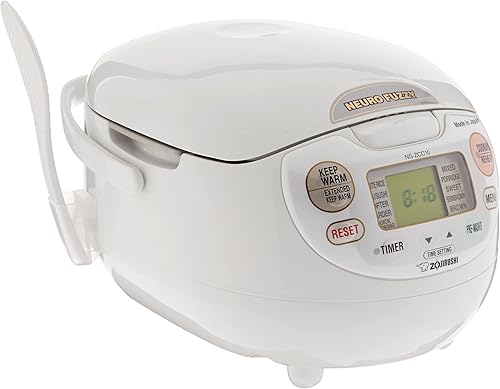 Best for rice-focused cooks
Zojirushi NS-ZCC10 Neuro Fuzzy Rice Cooker
 Best for mixed meal routines
Cuckoo CR-0675F 12-Cup Fuzzy Logic Rice Cooker
Zojirushi vs Cuckoo: which settings will you actually use?
Choose Zojirushi for rice-specific choices and Cuckoo for a broader mix of foods. A long menu only helps when its options match meals you make regularly.
The Zojirushi menu covers white rice with regular, sushi, softer and harder choices, plus mixed rice, porridge, sweet rice, semi-brown, brown, rinse-free and quick cooking. That range suits a cook who changes rice types or wants a different texture for different dishes.
The Cuckoo has 10 cooking modes, with options that include glutinous white rice, brown rice, oats and baby food. It's a practical match if breakfast and other supported meals will share time with dinner rice.
Write down the meals you expect to make during a normal week. If several rely on a particular rice texture, prioritize those controls; if oats are a regular breakfast, count that as a useful function.
Zojirushi vs Cuckoo for sushi and everyday white rice
The Zojirushi is the clearer choice for a dedicated sushi rice option and selectable white rice texture. Those settings give you a direct starting point for rice served in bowls, alongside a main dish or prepared for sushi.
Sushi rice still needs the right rice variety and seasoning after cooking. A menu button handles the cooking program, while your ingredients and finishing steps shape the final dish.
The Cuckoo suits everyday white rice when its available programs match your meals. For more detail on Zojirushi's controls, see our NS-ZCC10 review.
How much does the capacity difference matter?
Cuckoo has the larger capacity, but the uncooked gap is modest. It holds 6 cups uncooked and up to 12 cups cooked, compared with Zojirushi's 5.5 cups uncooked and 10 cups cooked.
Use the uncooked figures for the clearest comparison. The extra half cup matters most when your normal dry-rice batch already approaches the Zojirushi's limit.
Don't read the cooked-cup difference as proof that Cuckoo accepts a much larger dry batch. Cooked volume changes with rice type and water absorption, so plan meals around the dry amount you usually measure.
For a household that cooks well below either maximum, capacity shouldn't decide the purchase. Give more weight to the menu choices and cleanup routine you'll use every day.
A rice cooker's maximum white-rice capacity also isn't permission to fill every recipe to the same level. Follow the manual's separate limits for porridge, mixed dishes and other foods that expand or foam.
Use our rice cooker size guide to plan around appetites, side dishes and leftovers. Count regular guests too, but don't size your everyday appliance around one rare gathering.
What does fuzzy logic change for the cook?
Both models adjust cooking time and temperature through fuzzy logic. That shared feature makes the menu and measuring process more useful buying distinctions than the technology name alone.
Zojirushi calls its system Neuro Fuzzy, while Cuckoo uses fuzzy logic controls. Neither label removes your part in choosing the right program and adding the right amount of water.
Think of the program as a starting recipe for the cooker. Using a white rice cycle for a different grain can give the appliance the wrong starting point, even with automatic adjustments.
Our fuzzy logic rice cooker guide covers the control system in more depth. For a broader explanation of capacity, pot care and useful programs, see how to choose a rice cooker.
Which cooker better suits a busy meal schedule?
Zojirushi offers more named warming controls; both models support scheduled cooking. Choose around when you serve rice, rather than assuming every timer works the same way.
The NS-ZCC10 has a delay timer with 2 settings, automatic keep-warm, extended keep-warm and a reheat cycle. Its LCD clock lets you check the time on the cooker.
The Cuckoo has a timer setting and warming mode. Those functions cover planning ahead and holding rice for serving, without making its controls identical to Zojirushi's.
Before relying on a timer, confirm whether you're entering a finish time or a delay period. Set the clock correctly where required, and try the controls on a day when a timing mistake won't disrupt dinner.
For staggered meals, prepare the amount you expect people to eat and follow the manual's holding directions. Warming and reheating functions serve specific uses; neither is a reason to leave leftovers in the cooker indefinitely.
Our guides to using a Zojirushi rice cooker and using a Cuckoo rice cooker explain the setup steps in more detail.
Is Cuckoo's quick mode a reason to choose it?
Cuckoo's quick white rice mode is useful when you start dinner late. Its stated cooking range is 28 to 36 minutes, so it fits a routine where rice needs to cook while you prepare the rest of the meal.
Treat that range as guidance for the named mode, not a finish time for every food. Brown rice, oats and other programs have different cooking needs.
Zojirushi also includes quick cooking, but there's no matching time here for a fair speed comparison. Choose Cuckoo for its stated quick-white-rice option rather than assuming it is faster across all programs.
A quick cycle also leaves you with measuring, rinsing where appropriate and serving steps. If dinner timing is the main problem, decide whether a quick mode or a planned finish time solves it more often.
How should you set up either cooker?
Use the included rice cup, the correct water marks and a supported recipe for your first batch. A simple white-rice batch gives you a clear starting point before you change ingredients or texture preferences.
Zojirushi includes separate cups for regular and rinse-free rice, while Cuckoo includes a measuring cup and spatula. Don't substitute a household measuring cup and assume the pot's marks will still match.
Place the cooker on a stable surface with room for the lid to open and steam to escape. Keep the vent clear, and follow the manual's placement guidance around walls and cabinets.
Before the first cook, wash the removable food-contact parts as directed. Dry the outside of the inner pot and check that no loose grains sit between the pot and the heating surface.
Measure the dry rice first, rinse it as appropriate, then add water using the instructions for that rice and program. Check that the pot sits properly before closing the lid and selecting the cycle.
After cooking, follow any resting guidance before fluffing gently with the rice paddle. For later batches, change one thing at a time so you can tell which adjustment improves the texture.
Which cleanup routine is easier to maintain?
Choose Cuckoo if a self-clean cycle is a feature you'll use regularly. Zojirushi also provides access for routine washing, so neither choice removes the need to clean rice residue after meals.
The Cuckoo combines a self-clean setting, nonstick pot and removable lid, with hand washing specified for care. Run the cleaning cycle according to its instructions and wash the appropriate removable parts separately.
The Zojirushi has a spherical nonstick pan and a detachable, washable inner lid. Wipe the cooker body with a damp cloth and follow the manual's separate directions for the removable parts.
Let either appliance cool before cleaning, then loosen stuck rice with water rather than scraping it off. Use a soft sponge and suitable utensils to protect the nonstick surface.
Pay attention to the lid and steam path as well as the pot. Rice residue left above the food can make the next cleanup harder, even when the cooking bowl looks clean.
Our rice cooker cleaning guide explains the broader routine. Make sure the parts are clean and dry before putting everything back together.
Will either cooker fit your counter?
Measure the space with the lid open, not just the base on the counter. Access for loading rice, removing the pot and releasing steam matters as much as the closed dimensions.
The Zojirushi measures about 10.13 inches wide, 13 inches deep and 8.13 inches high. The Cuckoo measures about 9.37 inches wide, 12.7 inches deep and 8.5 inches high.
Cuckoo's slightly narrower base may help on a crowded counter, but measure your actual gap. A close fit below a cabinet can still make the cooker awkward to use.
Zojirushi's retractable cord helps when you put it away between meals. If it will live in a cabinet, check that you can lift it in and out comfortably and return it to a suitable cooking position.
Both models use 120-volt power. Confirm that this matches your kitchen's supply before ordering, especially if you're shopping for use outside a typical US kitchen.
Which common mistakes should you avoid?
Match the measuring method and program before blaming the cooker for poor texture. Automatic controls work best when you start with the right rice, water and batch limits.
- Mixing measuring systems: use the supplied rice cup with the matching pot marks, rather than switching between cups during preparation.
- Choosing by color alone: brown rice needs its own program and water guidance, even when you want a result similar to white rice.
- Overfilling mixed dishes: added vegetables and other ingredients take up space, so use the recipe limit rather than the plain-rice maximum.
- Changing several variables: adjust water or a texture choice separately, instead of changing the rice type, quantity and program together.
- Opening the lid repeatedly: leave the cooking process undisturbed unless the manual tells you to open it at a particular stage.
- Scraping the pot: lift rice with a suitable paddle and soak residue instead of using metal utensils or abrasive cleaners.
Keep a short note of the rice variety, dry amount, program and any water adjustment that works for you. That turns a good batch into a routine you can repeat without guessing.
Who should buy each model, and who should skip it?
Buy Zojirushi for a rice-centered routine and Cuckoo for a wider mix of supported meals. Skip either one if its added functions won't solve a problem you have now.
The NS-ZCC10 suits someone who pays attention to rice texture, uses different rice varieties and wants more choices for serving later. It is especially relevant when dinner rice is a frequent part of the week.
Skip Zojirushi if your main goal is making oats in the same appliance, or if your normal batch exceeds its limit. Paying for rice-specific controls makes less sense when you'll use only one basic program.
The CR-0675FG suits someone who expects to switch between rice and other supported foods. Its cleaning cycle is also a useful reason to choose it if you'll follow the rest of the care routine.
Skip Cuckoo if you're choosing it only because the cooked-capacity numbers look far apart. The dry-rice difference is small, and Zojirushi's texture choices may be more useful to you.
If you're unsure whether the extra controls justify choosing Zojirushi, read whether a Zojirushi rice cooker is worth it. If neither model matches your routine, our best rice cookers guide covers other choices.
Zojirushi vs Cuckoo: make the final choice
Pick the feature you'd miss during a normal week. That is the clearest way to settle Zojirushi vs Cuckoo without letting a brand name or maximum capacity decide for you.
Choose the NS-ZCC10 when adjusting rice texture and managing later servings are regular needs. Choose the CR-0675FG when you'll use its broader food options, cleaning cycle or extra batch space.
Before ordering, write down your usual dry-rice amount and measure your counter space. Then compare our rice cooker brand guide if you still want to consider other manufacturers.
Sources
These links identify the exact models compared here. Match the model number when ordering, since other cookers from the same brands can have different controls and capacities.
- Zojirushi NS-ZCC10: See it on Amazon
- Cuckoo CR-0675FG: See it on Amazon
Frequently asked questions
Is Zojirushi or Cuckoo better for rice?
The Zojirushi NS-ZCC10 is the stronger fit for cooks who want dedicated sushi rice and white rice texture choices. The Cuckoo CR-0675FG suits cooks who also want oats and baby food options, so choose by your normal meals rather than treating either brand as the automatic winner.
Which rice cooker has more capacity?
The Cuckoo CR-0675FG holds 6 cups uncooked and up to 12 cups cooked, while the Zojirushi holds 5.5 cups uncooked and makes 10 cups cooked. Compare the uncooked limits using the included measuring cups, since those figures give you a clearer measure of the batch size difference.
Can both cook brown rice?
Both cook brown rice, so that need alone doesn't decide this comparison. Choose the dedicated brown rice option and its matching water guidance on either cooker, then consider your other meals: Zojirushi adds semi-brown and rice texture choices, while Cuckoo also supports foods such as oats.
Which is easier to clean?
Choose the Cuckoo if you specifically want a self-clean cycle alongside a removable lid, but allow time for hand washing its removable parts. Zojirushi also offers a washable inner lid and nonstick pan, so the better choice depends on which cleanup routine you're willing to follow after meals.
Does the Zojirushi have a timer?
Yes, the NS-ZCC10 has a delay timer with 2 settings, plus automatic keep-warm, extended keep-warm and reheat cycles. The Cuckoo also has a timer and warming mode, so check how each model sets the meal time before choosing the controls that best match your routine.


