Zojirushi Micom vs Neuro Fuzzy: What Is the Difference? (October 2026)
For Zojirushi Micom vs Neuro Fuzzy, choose the compact NS-LGC05XB for small batches, the NS-ZCC10 for rice texture choices, or the NS-TSC10 for steaming. Buy for your usual portions and meals, since Micom models come in different sizes.
On this page (9 sections)
- Zojirushi Micom vs Neuro Fuzzy: what is the main difference?
- Which model fits your usual batch size?
- Which settings will you actually use?
- Is the NS-TSC10 Micom a better choice for steaming?
- How should you set up your first batch?
- Do timers and keep-warm functions fit your schedule?
- How do you care for the pot and lid?
- Which buying and cooking mistakes should you avoid?
- Which Zojirushi Micom or Neuro Fuzzy should you choose?
For Zojirushi Micom vs Neuro Fuzzy, choose the NS-LGC05XB for small portions, the NS-ZCC10 for rice texture choices, or the NS-TSC10 for steaming. Your usual batch and the foods you cook matter more than the name on the front.
Micom doesn't mean small, and Neuro Fuzzy doesn't automatically mean the better buy. These 3 models serve different routines, from breakfast oats for one to rice for shared meals.

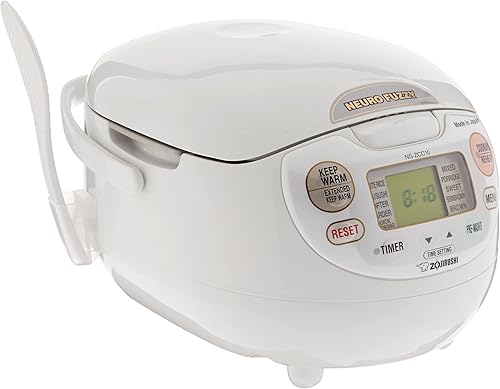
Zojirushi Micom vs Neuro Fuzzy: what is the main difference?
The main buying difference is capacity and menu choice: the compact Micom favors small batches, the Neuro Fuzzy offers varied rice settings, and the larger Micom adds steaming. Fuzzy logic is not exclusive to the Neuro Fuzzy model.
Computerized rice cookers use controls to manage the cooking process. Zojirushi says the NS-ZCC10's Neuro Fuzzy system makes fine adjustments to temperature and heating time.
That description doesn't establish a measured advantage over every Micom cooker. The NS-TSC10 also uses micro computerized fuzzy logic, so treating this as a simple choice between computerized and basic cooking would be wrong.
Start by writing down your usual rice type, dry batch size and any second use you need. A feature that solves a weekly cooking need deserves more weight than a technology name.
For the underlying idea, read what fuzzy logic means in a rice cooker. The complete fuzzy logic rice cooker guide explains how those controls fit into a wider buying decision.
Zojirushi Micom vs Neuro Fuzzy: compare the model, not just the name
Compare exact model numbers because the Micom label covers both compact and larger choices. The NS-LGC05XB and NS-TSC10 share that label but differ in capacity and useful extra functions.
Keep those model numbers handy when checking manuals or accessories. Advice for one Zojirushi cooker should not be assumed to cover another model's water lines, menu limits or removable parts.
Which model fits your usual batch size?
Choose capacity around an ordinary meal, with room for leftovers you actually want. Buying around a rare gathering can leave you storing a larger appliance all year for little benefit.
The NS-LGC05XB has a 3-cup capacity and can cook as little as 1/2 cup of rice or oats. The NS-ZCC10 and NS-TSC10 each hold up to 5.5 cups of uncooked rice.
Those numbers describe rice measured before cooking, not portions served at the table. Don't compare them directly with a bowl of cooked rice or assume every grain has the same maximum amount.
Measure a few normal meals before deciding. Include second helpings and planned lunches, but distinguish those needs from leftovers that usually go uneaten.
Our guide to choosing a rice cooker size helps translate household habits into capacity. A small household that cooks ahead may need more room than a larger household that serves rice only as a side.
When does the compact Micom make sense?
The compact model makes sense when modest portions are your normal routine. It also suits someone who wants rice at dinner and oats at breakfast without committing counter space to a larger cooker.
Its body measures 11.8 inches deep, 9.1 inches wide and 7.5 inches high. The fold-down handle and retractable cord help when you move it between a cupboard and the counter.
Leave additional room to open the lid and let steam escape. Closed-body measurements alone won't tell you whether a cooker works beneath a low shelf.
Skip it if your normal rice batch already approaches its limit or you often prepare several meals together. Repeatedly making another batch defeats much of the convenience of an automatic cooker.
When should you consider a larger cooker?
Consider a larger cooker when shared meals or planned leftovers regularly exceed the compact model's capacity. More room is useful when you have a clear use for it.
The NS-ZCC10 measures about 13 inches deep, 10.13 inches wide and 8.13 inches high. The NS-TSC10 is 14 inches deep, 10.13 inches wide and 8.5 inches high, so check counter depth as well as width.
Don't assume a larger cooker can handle every tiny batch. Check its menu-specific minimum before buying if you alternate between cooking for one and cooking for several people.
The rice cooker size guide can help you make that trade-off. Once capacity is settled, let your preferred foods decide between the larger models.
Which settings will you actually use?
Choose menus that match your weekly meals, rather than the longest feature list. A dedicated setting matters when you regularly cook that food and want a clear starting point for water and preparation.
The NS-ZCC10 covers white rice, including regular or sushi and softer or harder choices. Its other menus include mixed, porridge, sweet, semi-brown, brown, rinse-free and quick cooking.
The compact Micom's useful distinctions are steel-cut oatmeal, brown or GABA Brown, and long-grain white settings. Its oatmeal program uses a different cooking flow from regular porridge, while the long-grain program differs from the standard white rice flow.
A rice menu is a cooking program, not a recipe for every dish with that name. Follow the manual's ingredient limits and preparation steps, especially for mixed rice and foods that foam.
Who should buy the NS-ZCC10 Neuro Fuzzy?
Buy the NS-ZCC10 if rice is central to your meals and you want control over white rice texture. Its softer and harder options give you a direct way to choose a result without treating each batch as a new recipe.
It also suits a kitchen that rotates among different rice types. Separate menus are more useful here than they are for someone who cooks the same bag of rice every evening.
Skip it if those choices would go unused and your normal portions are small. Choosing Neuro Fuzzy purely because the name sounds more advanced doesn't solve a capacity mismatch.
Who benefits from the compact Micom's specialty menus?
Choose the compact Micom if steel-cut oats or long-grain white rice are regular foods in your kitchen. Those dedicated programs are practical reasons to choose it even when you could fit a larger cooker.
The GABA Brown program includes a stage that holds the pan at about 104°F for 2 hours. Allow for that stage in your meal plan instead of treating it as a faster brown rice option.
Don't choose that program for a promised health result. Decide whether the preparation and added time suit how you want to cook brown rice.
Is the NS-TSC10 Micom a better choice for steaming?
The NS-TSC10 is the clearest choice here for regular steaming, with a Steam menu and included basket. Buy it when that function has a place in your weekly meals.
Think about what you'd put in the basket and how often you'd use it. If you already have a convenient steaming method, this feature may add little to your routine.
The cooker also includes a Cake menu. That can be a useful extra, but it shouldn't outweigh rice capacity and everyday use when those are your main reasons for buying.
Follow the manual for steaming water amounts, food placement and timing. Don't assume the basket means you can steam food above rice during every rice program.
Skip this model if you mainly want the NS-ZCC10's white rice texture choices. Our Zojirushi NS-TSC10 vs NS-ZCC10 comparison looks more closely at those larger options.
How should you set up your first batch?
Start with plain rice and the matching menu, using the supplied measuring cup and the correct water marks. A simple first batch gives you a useful baseline before you change texture or add ingredients.
All 3 cookers include a rice-measuring cup. Zojirushi specifically directs NS-ZCC10 users to measure with the supplied cup, and that model includes separate regular and rinse-free cups.
Follow this sequence for a repeatable starting point:
- Read the manual's first-use cleaning steps and wash the parts it identifies.
- Measure dry rice with the supplied cup, leveling each measure.
- Rinse according to the rice instructions and the selected cooking method.
- Add water to the matching mark with the pot on a level surface.
- Wipe the outside of the pot dry before placing it in the cooker.
- Select the correct menu and follow the manual's finishing instructions.
Check the water level after the rice is in the pot. Adding a measured volume of water without accounting for the rice can give a different result from using the marked line.
For the next batch, change one thing at a time if you want a firmer or softer result. Keep the rice type and dry amount consistent so you can tell what the adjustment did.
Our guide to using a Zojirushi rice cooker walks through the routine in more detail. Keep your model's manual nearby for instructions that depend on its controls.
Do timers and keep-warm functions fit your schedule?
The NS-ZCC10 and NS-TSC10 offer scheduling and serving flexibility, with 2 delay settings, automatic and extended keep-warm, and a reheat cycle. These functions matter most when cooking and eating happen at different times.
Check whether a timer entry means the desired finish time or a delayed start. Read the model's instructions rather than guessing from the clock display.
Use delayed cooking only for foods and menus the manual allows. Don't leave meat, dairy or other perishable additions sitting in the pot while waiting for a later cycle.
Keep-warm serves cooked rice; it isn't a substitute for the cooking program. Follow the manual's permitted foods and holding limits, and refrigerate leftovers promptly when you aren't keeping them hot.
A reheat cycle also isn't permission to leave rice sitting at room temperature. Plan storage separately from serving, particularly when cooking extra for another day.
How do you care for the pot and lid?
Protect the nonstick pot and steam path with gentle cleaning after use. All 3 models have nonstick inner pots, so utensils and cleaning tools matter more than the exterior finish.
Unplug the cooker and let it cool before cleaning. Use a soft sponge and mild detergent on washable parts, and avoid metal scrapers, abrasive pads and cutting food inside the pot.
Hand washing is specified for the compact Micom and NS-TSC10. The NS-ZCC10 has a detachable, washable inner lid; follow its manual to separate washable parts from the electrical body.
Wipe the cooker body with a damp cloth instead of immersing it. Clean removable steam parts as directed, since dried starch around vents and seals makes later cleanup harder.
Dry the pot's outside and accessible surfaces before reassembly. If rice sticks, let the pot soak once it has cooled rather than scraping the coating.
For wash-method details, see whether a Zojirushi rice cooker pot belongs in the dishwasher. Check each removable part separately instead of assuming one care instruction covers the whole appliance.
Which buying and cooking mistakes should you avoid?
Avoid capacity guesses and mismatched programs before blaming the cooker for a disappointing batch. Computer controls still depend on suitable amounts, correct water and the right menu.
The most useful checks are straightforward:
- Using a kitchen cup: stick with the supplied rice cup so the dry amount matches the pot's markings.
- Using the wrong water line: match the rice type, menu and batch amount.
- Filling every menu to the rice maximum: porridge, oats and mixed recipes can have different limits.
- Switching several variables together: changing rice, water and program makes it harder to improve the next batch.
- Buying for rare occasions: choose for everyday meals unless larger gatherings are a regular need.
- Ignoring lid clearance: measure working space, including room for steam and serving.
Also resist choosing by wattage alone. Electrical input doesn't tell you which cooker has the portions, menus or controls that best fit your meals.
Which Zojirushi Micom or Neuro Fuzzy should you choose?
For Zojirushi Micom vs Neuro Fuzzy, let batch size decide first and your most-used menu decide second. That order gives you a cooker that fits ordinary meals and earns its space.
Choose the NS-LGC05XB if small servings, oatmeal and compact storage describe your routine. Choose the NS-ZCC10 if you need larger batches and want rice-specific choices, especially softer or harder white rice.
Choose the NS-TSC10 if you need the larger capacity and will use the steaming basket regularly. Skip extra capacity or specialty functions when you can't name a recurring use for them.
Before ordering, check the minimum batch, menu limits and working clearance in the matching manual. For a closer look at either rice-focused choice, read our NS-ZCC10 Neuro Fuzzy review or 3-cup Micom review.
Frequently asked questions
Is Zojirushi Micom the same as Neuro Fuzzy?
Micom and Neuro Fuzzy are not interchangeable model names; the NS-TSC10 Micom uses micro computerized fuzzy logic, while the NS-ZCC10 uses Neuro Fuzzy logic. Choose between these cookers by capacity and functions rather than assuming the names alone establish which one will suit your meals.
Which Zojirushi rice cooker is better for a small household?
The NS-LGC05XB is the strongest fit when you regularly cook small portions because it handles as little as 1/2 cup of rice or oats. Household size is only a starting point, though: a couple that prepares several meals at once may benefit from a larger cooker.
Does the Neuro Fuzzy cooker have more settings?
The NS-ZCC10 offers a broad rice menu, including white rice texture choices, mixed, sweet, semi-brown and rinse-free rice. More settings are useful only when they match your food; the compact Micom's dedicated oatmeal and long-grain white settings may matter more to your routine than a longer menu.
Is the NS-TSC10 a Neuro Fuzzy cooker?
The NS-TSC10 is a Micom cooker with micro computerized fuzzy logic; its Steam menu and included basket make it worth considering if steaming is part of your routine. Compare it with the NS-ZCC10 by the functions you expect to use, rather than treating Micom as a capacity label.
How do you choose between a 3-cup and 5.5-cup Zojirushi?
Choose capacity from the uncooked rice you normally prepare, including any planned leftovers; the compact model suits small batches, while either larger model gives more room for shared meals. Check the manual's minimum and maximum amounts for each menu, since a cooker's headline capacity does not apply to every food.


