What Size Rice Cooker Do You Need?
The right rice cooker size for a family of 4 is usually around 3 to 5.5 cups uncooked for everyday meals. Start with your usual portions, then choose extra capacity for leftovers or guests while checking the cooker's minimum batch size.
On this page (8 sections)
- What rice cooker size works for a family of 4?
- How much rice should you cook for 4 people?
- Why do cooked and uncooked cup labels matter?
- Which of these cookers suits your family's routine?
- How should you set up and use a new cooker?
- What mistakes make a cooker feel like the wrong size?
- How do you manage leftovers and daily cleaning?
- Which rice cooker size should your family of 4 choose?
The right rice cooker size for a family of 4 is usually 3 to 5.5 cups uncooked for everyday meals. Choose within that range based on your portions, leftovers, and how often rice is the main part of dinner.
A 10-cup uncooked cooker is a larger-batch choice, useful for regular meal prep or guests. Before buying, check both the smallest allowed batch and the maximum capacity for the rice you cook.
What rice cooker size works for a family of 4?
Choose a cooker that fits your usual dinner batch, with extra room for the leftovers you actually want. A 3-cup uncooked model can suit modest meals, while a 5 to 5.5-cup model gives more room for generous servings.
Think of capacity as a ceiling, not a serving target. You don't need to fill the pot, but your normal batch must fall within its allowed range.
For 4 people eating rice as a side, a large cooker can add bulk without helping dinner. Families serving rice bowls, packing lunches, or feeding hungry teenagers have more reason to size up.
If your needs change from day to day, favor a model whose minimum batch covers a small lunch and whose maximum covers your regular dinner. An occasional party shouldn't decide the size of an appliance you use all week.
How much rice should you cook for 4 people?
Start with 1.5 to 2 standard US cups of uncooked rice, then adjust after a few meals. Depending on the variety, that often produces roughly 4.5 to 6 cups cooked, enough for moderate to generous portions.
Four side servings may need less, especially with beans, vegetables, or several other dishes. Rice-centered meals and planned lunch portions call for more.
Use a simple meal plan to estimate cooked rice needs:
- Small side portions: about 2 to 3 cups cooked in total.
- Generous dinner portions: about 4 to 6 cups cooked.
- Dinner plus leftovers: about 6 to 8 cups cooked.
These are portion guides, not fixed yields. Note the dry amount you used and how much remained, then adjust the next batch instead of repeatedly cooking to the pot's maximum.
Why do cooked and uncooked cup labels matter?
A cup of dry rice and a cup of cooked rice are different measures of capacity. Rice gains water and expands during cooking, so 10 cups uncooked describes a much larger batch than 10 cups cooked.
The measuring cup adds another difference. A common rice cooker cup holds 180 mL, while a standard US measuring cup holds about 237 mL.
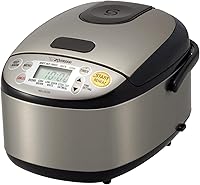
For example, the Zojirushi NS-TSC18 uses its supplied 180 mL cup to measure raw short-grain white rice. Its capacity guidance also notes that other grains may vary.
How do you compare rice cooker sizes for a family of 4?
Compare models by uncooked capacity using the same cup size, then check rice-specific limits. Don't compare one model's cooked output with another model's dry-rice capacity.
Brown rice, porridge, and other programs may have lower fill limits than white rice. Follow the marks for the selected program rather than assuming every setting accepts the largest batch.
Our guide to choosing a rice cooker explains the other features worth checking. For households whose usual batches fall at the smaller end, compare small rice cookers.
Which of these cookers suits your family's routine?
These options make the most sense for families wanting room beyond a modest dinner batch. Choose by how you use that room, then confirm the minimum amount before ordering.
For a wider range of capacities, our best rice cookers guide is a useful next comparison.
Zojirushi Neuro Fuzzy: for families cooking several rice types
Choose the Neuro Fuzzy if you regularly switch among white, brown, sushi, sweet, or semi-brown rice. Dedicated settings give those meals a clearer starting point than using one basic cycle for everything.
Its Neuro Fuzzy controls adjust cooking temperature and time automatically. The detachable inner lid and stay-cool pan handles also make sense for a household that cooks rice often and cleans the cooker after each meal.
Confirm the capacity convention before ordering this model: the supplied description refers to cooked cups, while its name uses a 10-cup label. Skip it if your main need is a small cooker for occasional side dishes rather than a range of rice programs.
Zojirushi NS-TSC18: for dinner and planned leftovers
Choose the NS-TSC18 if you regularly prepare rice for dinner and later meals. Its automatic and extended keep-warm functions, reheating cycle, and 2 delay settings support a routine with several serving times.
The clear-coated stainless steel exterior and retractable cord are useful if the cooker stays on the counter but gets moved for cleaning. The pot requires hand washing.
Skip this size if you usually cook only enough rice for 4 small side portions. Its extra room is worthwhile when larger batches are routine, rather than something you might make a few times a year.
COMFEE': for families wanting more than rice
Choose the COMFEE' if you want programs for foods such as soup, stew, pasta, and steamed vegetables alongside rice. Its 11 programs give it a broader role in meal preparation.
The removable steam valve needs regular cleaning, while the nonstick inner pot calls for gentle utensils. A 24-hour delay timer and 12-hour keep-warm function offer scheduling options, but food ingredients still determine when delayed cooking is suitable.
Skip it if you only want small batches of plain rice. More programs won't help if you prefer separate pans for your other dishes and have limited storage space.
Cuckoo CR-1020F: for large batches and texture preferences
Choose the CR-1020F if you often feed guests and want control over rice texture. Its My Mode function lets you adjust temperature for different texture choices, alongside fuzzy logic controls and programs for brown rice, porridge, steaming, and multi-cooking.
This is a better fit for a family that uses extra capacity regularly than one buying spare room just in case. Skip it if your priority is the simplest possible routine and you have little interest in adjusting settings.
Start with a standard program before changing texture controls. That gives you a useful reference for deciding whether your next batch needs a different setting.
How should you set up and use a new cooker?
Use the supplied cup, the correct water marks, and a level counter for your first batch. Follow the manual's placement clearances so steam can escape without collecting under a cabinet.
Wash removable food-contact parts before first use as directed. Keep the outside of the inner pot and the heater area clean and dry before seating the pot.
For a straightforward first batch:
- Measure dry rice with the supplied cup.
- Rinse it if the rice instructions call for rinsing.
- Add water to the matching line for that rice type.
- Select the correct program and let the cycle finish.
- Follow any resting guidance, then fluff gently with the paddle.
Change only one thing when adjusting results. Keeping the same rice and dry amount while making a small water adjustment helps you learn your preferred texture.
What mistakes make a cooker feel like the wrong size?
The biggest mistake is choosing by the largest number on the box. Check the capacity unit, your usual batch, and the relevant program limit together.
Avoid these other common errors:
- Mixing measuring cups: using a US cup with water marks intended for a smaller rice cup changes the ratio.
- Ignoring minimum amounts: a large pot may not support the tiny batch you want for lunch.
- Overfilling for brown rice or porridge: use their specific limits.
- Measuring only the base: allow room to open the lid, lift the pot, and release steam.
- Making unwanted leftovers: extra capacity saves effort only when the rice gets eaten.
Don't choose solely by cabinet storage dimensions, either. A cooker must fit safely where it runs, with room to serve from it and wipe around it.
How do you manage leftovers and daily cleaning?
Plan storage and cleanup before making a large batch. Cool leftover rice promptly in shallow containers and refrigerate it rather than leaving it at room temperature.
Keep-warm functions serve a different purpose from refrigerated storage. Follow the model's instructions for holding rice, and avoid repeated warming and cooling.
After the cooker cools, remove food residue with a soft sponge and suitable dish soap. Clean accessible lid parts and steam passages as directed, and avoid metal tools on nonstick surfaces.
Our rice cooker cleaning guide covers the routine in more detail. Regular cleaning also keeps dried starch from building up around the lid and vent.
Which rice cooker size should your family of 4 choose?
Choose 3 cups uncooked for modest meals, around 5 to 5.5 cups for more flexibility, or a larger cooker when batch cooking and guests are regular needs. Check the minimum batch before committing to extra capacity.
Among these options, choose Neuro Fuzzy for varied rice programs, NS-TSC18 for planned larger batches, COMFEE' for broader cooking programs, or Cuckoo for large batches with texture controls.
Rice type should help settle the final choice. Compare rice cookers for brown rice or rice cookers for sushi rice if either is a regular meal.
The right rice cooker size for a family of 4 fits an ordinary week, including the leftovers you'll use. For more on matching grains to capacity, browse our rice cooker size and type guide.
Frequently asked questions
What size rice cooker is best for a family of 4?
A 3 to 5.5-cup uncooked rice cooker is a useful range for a family of 4 making everyday meals. Choose the smaller end for modest portions and the larger end for rice-heavy meals or leftovers; check the minimum batch size as well as the maximum capacity before buying.
Is a 10-cup rice cooker too big for 4 people?
A 10-cup uncooked cooker is usually larger than 4 people need for one dinner, but it can suit regular batch cooking or guests; check its minimum batch size before buying, especially if you also make small lunches. A 10-cup cooked capacity describes a much smaller amount of dry rice.
How many cups of uncooked rice should I cook for 4 people?
Start with about 1.5 to 2 standard US cups of uncooked rice for 4 people, then adjust for appetite and the rest of the meal. That is roughly 2 to 2.5 rice cooker cups if each holds 180 mL; use the supplied cup when following the pot's water marks.
Do rice cooker cups mean cooked or uncooked rice?
Rice cooker capacities may describe uncooked rice, cooked rice, or both, so read the capacity wording before comparing models. Many supplied rice cups hold 180 mL, less than a standard US cup; use the cooker's own cup and the matching water marks, with separate instructions for each rice type.