7 Best Fuzzy Logic Rice Cookers (October 2026)
The best fuzzy logic rice cookers include the Zojirushi NS-ZCC10 Neuro Fuzzy Rice Cooker for everyday rice eaters, the Zojirushi Neuro Fuzzy 10-Cup Rice Cooker for shared family meals, and the Zojirushi NS-TSC10 Micom Rice Cooker for rice and vegetables.
On this page (10 sections)
- How we chose these fuzzy logic rice cookers
- Compare fuzzy logic rice cooker features
- The best fuzzy logic rice cookers for different needs
- Which capacity should you choose?
- Which fuzzy logic settings are useful?
- Do keep-warm and timer features matter?
- How should you set up the first batch?
- What care keeps a fuzzy logic rice cooker ready?
- Which mistakes make rice less consistent?
- Which fuzzy logic rice cooker should you pick?
The best fuzzy logic rice cooker for most households is the Zojirushi NS-ZCC10, because its rice menu includes useful texture choices rather than just extra dishes. Choose the Toshiba Mini for smaller batches or the Cuckoo CR-0675F for family dinners where a quick white rice cycle matters.
Start with your normal batch size, then choose the settings that match your meals. A cooker with more programs won't help much if its pot is too large for your daily portions.
Our complete fuzzy logic rice cooker guide explains the category in more detail. If you're still weighing the appliance itself, read whether a rice cooker is worth it before choosing a model.
Our picks at a glance
-
1
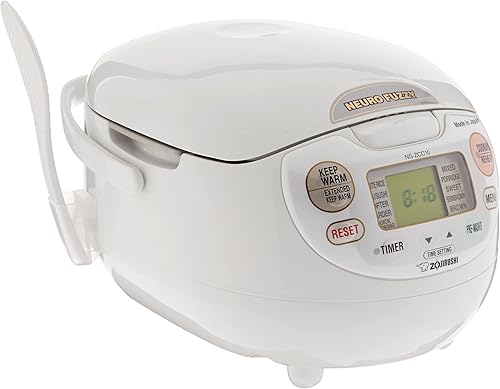 Best for everyday rice eaters
Zojirushi NS-ZCC10 Neuro Fuzzy Rice Cooker
8.9/10 our score
See it on Amazon -
2
 Best for shared family meals
Zojirushi Neuro Fuzzy 10-Cup Rice Cooker
8.7/10 our score
See it on Amazon -
3

- 4
 Check it
Toshiba Mini 3-Cup Rice Cooker
Best for small households - 5
 Check it
Cuckoo CR-0675F 12-Cup Fuzzy Logic Rice Cooker
Best for busy family dinners - 6
 Check it
Cuckoo CR-0632F 12-Cup Rice Cooker
Best for mixed-grain meals - 7
 Check it
Toshiba OriginTaste 5.5-Cup Rice Cooker
Best for varied weekly menus
How we chose these fuzzy logic rice cookers
We prioritized useful rice controls, suitable batch sizes and manageable care. We compared each model's capacity, menus, scheduling features and removable cleaning parts.
The NS-ZCC10 leads because it gives frequent rice eaters several ways to match the finished rice to dinner. Other picks earn their place through smaller capacity, steaming, quick white rice or grain-specific menus.
Treat the order as a starting point for your shortlist. A small household has a stronger reason to choose the Toshiba Mini than to buy a larger model simply because it sits higher here.
Compare fuzzy logic rice cooker features
Compare uncooked capacity first, then look for the menu or care feature that would change your routine. Cooked and uncooked cup counts aren't interchangeable.
| Product | Best for | Capacity | Main use | Timer | Our score |
|---|---|---|---|---|---|
| Zojirushi NS-ZCC10 Neuro Fuzzy Rice Cooker | everyday rice eaters | 5.5 cups uncooked | Varied rice types and textures | Delay timer with 2 settings | 8.9 |
| Zojirushi Neuro Fuzzy 10-Cup Rice Cooker | shared family meals | 10-cup designation; confirm cooked or uncooked | Rice-focused family meals | 2 delay start options | 8.7 |
| Zojirushi NS-TSC10 Micom Rice Cooker | rice and vegetables | Up to 5.5 cups uncooked | Rice cooking and steaming | 2 delay time settings | 8.6 |
| Toshiba Mini 3-Cup Rice Cooker | small households | 3 cups uncooked | Smaller rice and grain batches | Up to 24 hours | 8.5 |
| Cuckoo CR-0675F 12-Cup Fuzzy Logic Rice Cooker | busy family dinners | 6 cups uncooked, 12 cups cooked | Family batches and quick white rice | Timer setting | 8.4 |
| Cuckoo CR-0632F 12-Cup Rice Cooker | mixed-grain meals | 6 cups uncooked, 12 cups cooked | GABA rice and multigrain dishes | 13-hour preset timer | 8.3 |
| Toshiba OriginTaste 5.5-Cup Rice Cooker | varied weekly menus | 5.5 cups uncooked | Rice and other prepared dishes | 24 hours | 8.1 |
The best fuzzy logic rice cookers for different needs
The NS-ZCC10 is the broadest rice-focused choice, but a smaller pot or a specific cooking function may matter more in your kitchen. Each recommendation below explains who should choose it and who should keep looking.
Zojirushi NS-ZCC10 Neuro Fuzzy Rice Cooker
- 5.5-cup uncooked capacity
- White rice texture choices
- Automatic and extended keep warm
- Reheat cycle
Choose this model when rice is a regular part of dinner and you want control over white rice texture. Its menu also covers brown rice, mixed rice and porridge.
Pros
- Softer and harder white rice options
- Detachable washable inner lid
- Retractable cord
Cons
- More capacity than some small households need
- No steam menu specified
The NS-ZCC10 suits households that eat rice often and care about how it fits the meal. Its softer and harder white rice choices are useful if you prefer softer rice with one dinner and firmer grains with another.
Its menu also covers sushi, mixed, sweet, semi-brown, brown and rinse-free rice, plus porridge and quick cooking. That gives rice-focused cooks more relevant choices than a menu built mainly around non-rice dishes.
The bowl holds 5.5 cups uncooked and makes up to 10 cups cooked. Automatic and extended keep warm, reheating and 2 delay settings suit dinners where everyone doesn't sit down at once.
A spherical nonstick pan, detachable washable inner lid and retractable cord round out the daily-use features. Use the correct supplied measure, including the separate rinse-free cup when the instructions call for it.
Choose this for frequent rice meals with changing textures and varieties. Skip it if you mainly need small portions or want an included steaming basket; those needs point to other picks below.
Zojirushi Neuro Fuzzy 10-Cup Rice Cooker
- Neuro Fuzzy cooking adjustments
- White, brown and sushi rice options
- 2 delay start options
- Extended keep warm
The NS-ZCC18 suits rice-focused households that want scheduling and warming options. Confirm its capacity with Zojirushi before choosing it for a specific batch size.
Pros
- Broad rice menu
- Detachable inner lid
- Fold-down handle and retractable cord
Cons
- Conflicting cooked and uncooked capacity descriptions
- Larger footprint than the NS-ZCC10
The NS-ZCC18 belongs on the shortlist for shared meals where rice is a staple and serving times vary. Its automatic and extended keep warm support that routine, alongside 2 delay start options.
Neuro Fuzzy controls adjust cooking temperature and heating time. The menu includes white, brown, sushi, sweet, semi-brown and rinse-free rice, as well as porridge.
There is one buying detail to resolve: Zojirushi's capacity descriptions conflict on whether the 10-cup figure means cooked or uncooked rice. Confirm that distinction with Zojirushi before ordering for a specific batch size, rather than treating the name as a direct comparison with other models.
Its footprint is 14.25 inches deep by 11.13 inches wide, larger than the NS-ZCC10. A detachable inner lid, fold-down handle and retractable cord help with cleaning and storage.
Choose it if that confirmed capacity matches your household and you want a rice-focused menu. Skip it for a tight counter or when you need an unambiguous size choice without further checking.
Zojirushi NS-TSC10 Micom Rice Cooker
- Up to 5.5-cup uncooked capacity
- Steam menu and steaming basket
- Automatic and extended keep warm
- 2 delay time settings
The NS-TSC10 gives you a steam menu and included basket alongside fuzzy logic rice cooking. Choose it when steaming would earn this appliance more regular use.
Pros
- Includes steaming basket
- Reheat cycle
- Retractable power cord
Cons
- Full-size capacity may exceed small-batch needs
- Requires hand washing
The NS-TSC10 makes sense when you want one appliance for rice cooking and a separate steaming task. It includes a steam menu and steaming basket, giving it a clear reason to choose it over a rice-focused alternative.
That could suit a kitchen where steamed vegetables are a regular side dish. Follow the manual's quantities and timing rather than assuming rice and another food can always finish together.
Its capacity is up to 5.5 cups uncooked. Automatic and extended keep warm, a reheat cycle and 2 delay settings cover meal scheduling without making steaming its only useful feature.
The clear-coated stainless steel exterior can be wiped clean, while the cooking parts require hand washing. A retractable cord helps when putting the appliance away, and you can choose a melody or beep signal.
Choose it if you'll use the basket often enough to earn its storage space. Skip it if rice texture choices matter more; our Micom versus Neuro Fuzzy comparison helps explain that decision.
Toshiba Mini 3-Cup Rice Cooker
- 3-cup uncooked capacity
- White rice, brown rice and mixed grain options
- 24-hour delay timer
- Keep warm and reheat
The Toshiba Mini is the clearest fit for lighter rice needs. It combines a smaller bowl with grain and porridge options, so you don't need a family-size cooker for variety.
Pros
- Smallest confirmed uncooked capacity here
- Can prepare oatmeal and quinoa
- Removable steam valve
Cons
- Limited room for gatherings
- Inner pot is hand wash only
The Toshiba Mini is the clearest choice for small households with modest rice needs. Its 3-cup uncooked capacity avoids buying a family-size bowl just to gain fuzzy logic controls.
Toshiba positions it for 1 to 3 people, but portions matter more than that head count. A couple serving rice as a side may need much less than someone preparing several rice-based lunches.
White rice, brown rice, mixed grain and porridge options cover common changes in routine. It can also prepare oatmeal and quinoa, so a smaller capacity doesn't restrict you to plain white rice.
The LED display, keep warm, reheat and a delay timer of up to 24 hours support everyday use. Its removable steam valve helps you reach an area where starchy residue can collect.
Choose it for regular smaller meals and limited batch needs. Skip it if you often host or prepare several days of rice at once, and check the manual's minimum quantity if single servings are your main use.
Cuckoo CR-0675F 12-Cup Fuzzy Logic Rice Cooker
- 6-cup uncooked and 12-cup cooked capacity
- Quick white rice setting
- Self-clean setting
- Timer and warming mode
Choose this Cuckoo for family-size batches when a quick white rice cycle matters. Its self-clean setting and removable lid support regular care.
Pros
- Quick white rice option
- Self-clean setting
- Brown rice and oats options
Cons
- More capacity than light rice eaters need
- Self-clean does not replace washing the pot
The Cuckoo CR-0675F suits families that want a quick white rice option without giving up batch room. It holds 6 cups uncooked or 12 cups cooked.
Cuckoo gives a 28–36 minute range for quick white rice. Plan around that specific mode rather than expecting brown rice, oats or every batch size to finish in the same time.
Its wider cooking options include glutinous white rice, brown rice, oats and baby food. A timer and warming mode support planned dinners, while the quick cycle offers another approach when you start later.
The self-clean setting is useful for routine care, but the pot still needs hand washing. Clean the removable lid and other washable parts as directed instead of relying on the automatic cycle alone.
Choose it when family portions and quick white rice are both regular needs. Skip it for mostly small servings, and compare it with the other options in our Cuckoo rice cooker guide if grain menus matter more than speed.
Cuckoo CR-0632F 12-Cup Rice Cooker
- 6-cup uncooked and 12-cup cooked capacity
- GABA and multigrain options
- Slow cook and multi-cook functions
- Detachable inner lid
The CR-0632F suits households that regularly cook beyond plain white rice. Its GABA and multigrain options give it a clear role beside the other Cuckoo here.
Pros
- GABA and multigrain menus
- Excess water drainage tray
- Detachable inner lid
Cons
- Family-size capacity may be unnecessary for small meals
- Inner pot needs hand washing
The CR-0632F is the better Cuckoo choice here for regular GABA rice and multigrain meals. Those named options give it a clear purpose if you rotate grains throughout the week.
Its menu also includes white rice, brown rice and porridge, alongside slow cook, reheat and multi-cook functions. Choose it because those foods appear in your meal plan, rather than because a longer menu sounds more capable.
The capacity is 6 cups uncooked or 12 cups cooked. That suits larger shared meals, but lighter rice eaters should think carefully before giving that much bowl space a permanent home.
Digital controls and an LCD display handle menu selection. The detachable inner lid and excess water drainage tray give you specific parts to include in your cleaning routine, alongside the hand-washed nonstick pot.
Choose this model for grain variety in family-size batches. Skip it if quick white rice is the main priority, and use our Zojirushi vs Cuckoo comparison if you're also weighing different approaches to rice menus.
Toshiba OriginTaste 5.5-Cup Rice Cooker
- 5.5-cup uncooked capacity
- 15 cooking functions
- 24-hour timer
- LCD display
The OriginTaste fits cooks who will use rice, grain, porridge and other food settings throughout the week. Choose it for useful menu variety rather than the function count alone.
Pros
- Jasmine rice, cake and egg options
- Removable steam valve
- Keep warm and reheat
Cons
- Extra menus add little for rice-only cooks
- Inner pot is not dishwasher safe
The OriginTaste suits cooks who want one cooker to handle several parts of a weekly menu. Its 15 functions include white rice, brown rice, mixed grain, jasmine rice, porridge, cake and egg.
That range is useful when the appliance will handle breakfast grains one day and rice for dinner the next. It adds less value if you expect to press the same white rice button every evening.
The pot holds 5.5 cups uncooked. Toshiba pairs fuzzy logic with 3D heating, an LCD display, a 24-hour timer and keep warm and reheat functions.
The nonstick inner pot needs mild soap and a soft cloth, and it isn't dishwasher safe. The steam valve is removable, so include it in regular care rather than cleaning only the bowl.
Choose this model if several named functions would replace tasks you already do. Skip it if your priorities are a smaller bowl, included steaming equipment or direct white rice texture choices; other picks address those needs more clearly.
Which capacity should you choose?
Choose a cooker that fits your usual dry-rice batch, with room for the larger meals you actually make. Buying for rare gatherings alone can leave you using an oversized appliance most days.
Measure your normal batch before shopping. Think separately about rice served as a side, rice as the main part of dinner and extra portions for later meals.
Choosing the best fuzzy logic rice cooker size
Use the supplied rice cup and the matching pot markings. A rice-cooker cup may differ from your kitchen measuring cup, so switching between them can change the rice-to-water ratio.
The Mini covers the smallest confirmed capacity in this group; the other clearly specified models sit in the family-size range. Maximum capacity doesn't tell you the smallest suitable batch, which matters if you often cook very little.
Check separate limits for brown rice, porridge and mixed dishes. Their fill lines or allowed quantities may differ from the white rice maximum, so don't carry one limit across every menu.
For shared meals, our guide to choosing a rice cooker size for a family of 4 helps turn household needs into batch size. Include your usual leftovers in that decision.
Which fuzzy logic settings are useful?
Choose menus for foods you already cook, then consider extras that would solve a regular task. More buttons don't make a cooker a better fit by themselves.
White rice texture controls matter if you have a clear preference for softer or firmer rice. A dedicated sushi setting is useful for sushi meals, though the rice still needs the right preparation and seasoning afterward.
Brown rice and mixed grains need their own approach to water and cooking time. Start with the cooker's instructions for the exact grain rather than using white rice directions as a shortcut.
A GABA program is a reason to choose a model when you specifically want that preparation method. It isn't a substitute for every brown rice or mixed-grain recipe.
Steaming, cake and egg functions deserve attention only if you'll use them. Check the required accessories, quantities and steps before assuming a named program replaces another appliance.
For grain blends, follow an approved recipe first. Grains that cook at different rates may need soaking or other preparation, and fuzzy logic can't make every random mixture finish evenly.
Do keep-warm and timer features matter?
Keep warm helps with staggered serving; a delay timer helps with planned cooking. Choose based on when you want rice ready and how long dinner usually takes to serve.
A timer may set a finish time or a delay before cooking starts, depending on the model. Confirm how yours works, and allow for programs that need longer than a quick white rice cycle.
A delay timer doesn't refrigerate ingredients. Follow the manual's limits for rice and water, and don't leave perishable additions waiting at room temperature for a later start.
Keep warm and reheat are different functions. Use each as directed, and don't assume a rice reheat cycle is suitable for every chilled dish.
Long holding can change rice texture, even when the cooker offers extended warming. Cook closer to serving when possible, and follow the manual's holding limits instead of treating keep warm as storage without an end time.
How should you set up the first batch?
Begin with plain rice on its matching standard program. That gives you a useful starting point before adding seasonings, mixed ingredients or changes to the water.
Read the manual, remove packaging and wash the removable food-contact parts as directed. Set the cooker on a stable surface with space above the steam outlet and enough room to open the lid fully.
Measure dry rice with the supplied cup. Rinse when the rice and instructions call for it, drain, then add water using the correct line for that rice type and quantity.
Use level measurements and spread the rice evenly. Check that the outside of the pot is clean and dry before placing it in the cooker, since stray grains or water shouldn't sit between the pot and heater.
Select the matching menu and let the cycle finish without repeatedly opening the lid. Release steam carefully when opening, keep your face back and fluff the rice with a suitable utensil.
If the texture needs adjustment, change one thing on the next batch and note it. Our guide to using a Zojirushi rice cooker offers more help with that brand's routine.
What care keeps a fuzzy logic rice cooker ready?
Clean the pot, lid parts and steam path as directed, rather than stopping after the bowl looks clean. Starch and condensation can leave residue in less visible areas.
Unplug the cooker and let it cool before removing parts. Wash the nonstick bowl with mild soap and a soft sponge or cloth, and avoid metal utensils and abrasive scrubbers.
Soak stuck rice in the removable bowl instead of scraping it away. Follow the manual for detachable inner lids, vent caps and drainage trays, since those parts don't all use the same cleaning method.
Wipe the main body with a damp cloth and keep water away from electrical parts. Let washed components dry, then put every piece back in place before the next cycle.
A self-clean program supports care but doesn't replace washing food-contact parts. Our rice cooker cleaning guide explains a routine you can adapt to your model.
Which mistakes make rice less consistent?
The most avoidable mistakes are mismatched measurements, the wrong menu and too much improvising at once. Fuzzy logic can adjust heat and time, but it still needs a suitable starting setup.
Don't measure rice with one cup and follow water directions meant for another. Use the supplied measure consistently, especially when comparing your results from one batch to the next.
Don't fill every dish to the white rice maximum. Porridge, mixed dishes and other grains need their own limits, and extra ingredients take up space too.
Use quick cook when its instructions suit the rice and quantity. It is a specific program, so don't treat it as a shortcut for every slower menu.
Avoid adding extra water automatically whenever rice is firm. First check the selected program, rice quantity, water line and any required preparation so you can correct the actual cause.
Don't assume every soft result needs a new cooker. Draining after rinsing, measuring carefully and changing only one variable makes it easier to settle on a repeatable routine.
Which fuzzy logic rice cooker should you pick?
Choose the best fuzzy logic rice cooker for your normal meal, then use occasional extras to break a tie. A useful shortlist should come down to a clear need.
- Choose the NS-ZCC10 for frequent rice meals where grain type and white rice texture both matter.
- Choose the NS-ZCC18 for its rice-focused menu and serving features once Zojirushi confirms the capacity you need.
- Choose the NS-TSC10 if the included steaming basket will get regular use.
- Choose the Toshiba Mini when smaller batches are the daily job.
- Choose the Cuckoo CR-0675F for family portions with a quick white rice option.
- Choose the Cuckoo CR-0632F for regular GABA rice and multigrain meals.
- Choose the Toshiba OriginTaste when several non-rice functions fit your weekly cooking.
If your shortlist centers on Zojirushi, compare our best Zojirushi rice cookers. For a wider choice of appliance styles, our best rice cookers guide is the next step.
Our top 3 picks at a glance
-
1
Best for everyday rice eaters
Zojirushi NS-ZCC10 Neuro Fuzzy Rice Cooker
8.9/10 our score
See it on Amazon -
2
Best for shared family meals
Zojirushi Neuro Fuzzy 10-Cup Rice Cooker
8.7/10 our score
See it on Amazon -
3
Frequently asked questions
What does fuzzy logic do in a rice cooker?
Fuzzy logic lets a rice cooker adjust heating time and temperature during the cooking cycle. You still need to measure rice and water correctly and select the right menu.
Read what fuzzy logic means in a rice cooker for a plain explanation of how those adjustments fit into cooking.
Which fuzzy logic rice cooker is best for a small household?
The Toshiba Mini is the best fit here for a small household, with a 3-cup uncooked capacity and options for rice, mixed grain and porridge. Choose by your usual batch rather than head count alone.
Check the minimum batch in the manual if you often cook a single serving.
Should you compare uncooked or cooked capacity?
Compare uncooked capacity whenever possible because it measures the dry rice going into the pot. Cooked volume changes with rice type and water absorption, so it is a less useful starting point.
Use the supplied rice measure, and check separate fill limits for brown rice, mixed dishes and porridge.
Can fuzzy logic rice cookers make more than white rice?
Yes, these models include options beyond white rice, but their menus differ. Some focus on rice textures and grains, while others add steaming, cake or slow cooking.
Choose functions you expect to use regularly, and follow each model's instructions rather than assuming every menu works with any ingredient.
Is a fuzzy logic rice cooker worth it?
A fuzzy logic cooker is worth considering if you make rice often, change rice types or want more control than a basic cook-and-warm appliance offers. Occasional white rice cooks may need fewer options.
Our rice cooker value guide helps you weigh those features against your routine.


