Zojirushi NS-ZCC10 Neuro Fuzzy Rice Cooker Review: Worth It? (October 2026)
The Zojirushi NS-ZCC10 suits frequent rice cooks who want texture choices and flexible meal timing. Choose it for rice-focused meals, choose the NS-TSC10 for steaming, and check your usual batch size before buying.
On this page (8 sections)
- What does the Zojirushi NS-ZCC10 offer?
- How much rice does the NS-ZCC10 make?
- Which settings will you actually use?
- How does the NS-ZCC10 compare with other Zojirushi models?
- How do you set up the NS-ZCC10 for the first batch?
- What mistakes should you avoid with this cooker?
- What should you know about cleaning and care?
- Should you choose the Zojirushi NS-ZCC10?
The Zojirushi NS-ZCC10 is a strong choice for frequent rice cooks who want different rice textures and more control over serving time. Its appeal is the combination of rice-focused menus, automatic adjustments and warm-holding options.
Choose it if rice anchors several meals each week, especially when you alternate between white rice, brown rice and porridge. If you want a dedicated steaming function or mostly prepare tiny batches, another cooker may fit your routine better.
What does the Zojirushi NS-ZCC10 offer?
The NS-ZCC10 offers rice texture choices and flexible meal timing in a computerized cooker. Zojirushi says its Neuro Fuzzy technology adjusts temperature and heating time during cooking.
Zojirushi NS-ZCC10 Neuro Fuzzy Rice Cooker
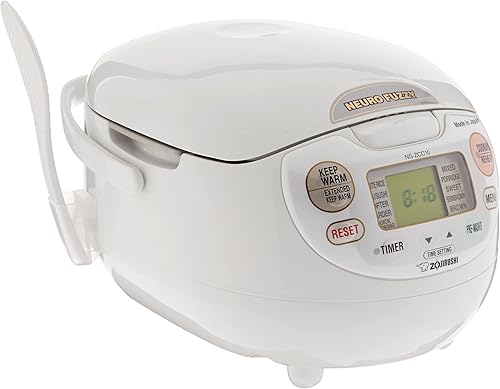
- 5.5 cups uncooked capacity
- Neuro Fuzzy logic
- White-rice texture choices
- Automatic and extended keep-warm
Choose this model when rice is a regular part of dinner and you want control over white-rice texture. Dedicated menus also cover brown rice, mixed rice and porridge.
Pros
- Softer and harder white-rice choices
- Automatic and extended keep-warm plus reheat
- Two delay timer settings
- Detachable washable inner lid
Cons
- Capacity may exceed the needs of small-batch cooks
- Coated pan needs gentle utensils and cleaning
Its menus cover white rice, mixed rice, porridge, sweet rice, semi-brown rice, brown rice, rinse-free rice and quick cooking. White rice has regular or sushi, softer and harder choices, giving you a clear starting point for different meals.
That matters if you prefer softer rice with a saucy dish but firmer grains for another meal. You can select a texture option before making small water adjustments, rather than treating every batch as the same recipe.
The spherical nonstick inner pan has stay-cool side handles, and Zojirushi says its shape supports uniform heating. These features help with cooking and handling, but your measuring and menu choices still matter.
Who should buy the Zojirushi NS-ZCC10?
Buy it if you cook rice often and care about texture enough to use its choices. It also suits households where rice needs to be ready before everyone sits down.
Skip it if your main goal is a cooker with a dedicated Steam menu and basket. The NS-TSC10 below addresses that need more directly.
Small-batch cooks should check the manual's minimum quantities before deciding. Our Zojirushi NS-LGC05 review is another starting point if a smaller cooker better matches your meals.
How much rice does the NS-ZCC10 make?
The NS-ZCC10 holds 5.5 cups of uncooked rice and makes up to 10 cups cooked. Measure dry rice with the supplied rice-measuring cup, not a standard kitchen cup.
Maximum capacity tells you how much the cooker can handle, not how much you should prepare each time. Start with your normal meal: how many people eat rice, how large their portions are and whether you want leftovers.
A household serving rice as a small side needs less than one using it as the main part of a bowl. The rice cooker size guide helps you think through those differences.
Don't apply the maximum rice capacity to every menu. Porridge and mixed-rice recipes can have different limits, so use the instructions for the selected dish.
For occasional guests, making a second batch may suit you better than storing a larger cooker all year. If large batches are routine, confirm both minimum and maximum quantities before choosing a model.
Will it fit your counter?
The NS-ZCC10 measures about 10.13 W x 13 D x 8.13 H inches. Leave extra space to open the lid, remove the pan and let steam escape as directed in the manual.
Measure the working space, not just the closed appliance. A cooker that fits beneath a cabinet may still need to move forward before use.
It uses a 120-volt supply and is rated at 680 watts. Check that your kitchen supply matches, especially if you're buying it for use outside a standard US setup.
Which settings will you actually use?
The most useful settings are the ones that match your regular meals. Pick the rice type first, then choose a texture option where available.
For white rice, begin with the regular setting and the matching water line. Try softer or harder on a later batch if your first result doesn't suit the dish.
The sushi option concerns cooking the rice; it doesn't replace seasoning and cooling it for sushi. Plan those steps separately instead of expecting the cooker to finish the whole preparation.
Use the brown-rice menu when cooking brown rice, rather than relying on a white-rice cycle with extra water. Different grains need different cooking approaches, which is why the menu choice comes before texture adjustments.
Quick cooking is useful when you need another timing option, but no specific cycle length is established here. Leave enough room in your meal plan until you know the timing for your usual batch.
For mixed rice, follow a recipe intended for the cooker and respect its ingredient limits. Adding extra vegetables or seasonings to a full rice batch can change the liquid balance and fill level.
How should you use the timer and keep-warm functions?
Use the 2 delay timer settings to plan rice around meals, following the clock and timer instructions carefully. Confirm whether the displayed time represents completion before relying on it for dinner.
Automatic keep-warm, extended keep-warm and reheat serve different purposes. Check the manual for which mode suits your rice and how long it can stay there.
Avoid repeated lid opening while rice is being held, since that releases heat and moisture. Cook closer to the amount you'll eat if leftovers regularly sit waiting for another meal.
A delay timer also needs a suitable recipe. Don't leave perishable additions sitting in the cooker for hours simply because the timer allows a later start.
How does the NS-ZCC10 compare with other Zojirushi models?
Choose between these models by batch needs, storage and cooking tasks. The Neuro Fuzzy name alone doesn't tell you which one belongs in your kitchen.
Zojirushi Neuro Fuzzy 10-Cup Rice Cooker

- Neuro Fuzzy technology
- Two delay start options
- Automatic and extended keep-warm
- Fold-down handle
Consider the NS-ZCC18 if a fold-down handle helps you move a cooled cooker into storage. Confirm its uncooked-rice capacity before choosing it for larger batches.
Pros
- Fold-down handle for moving into storage
- Two delay start options
- Detachable inner lid for washing
- Retractable power cord
Cons
- Larger footprint than the NS-ZCC10
- Capacity descriptions need clarification before planning larger batches
The Zojirushi Neuro Fuzzy 10-Cup Rice Cooker is model NS-ZCC18. Its fold-down handle and retractable cord make it worth considering if you put the cooled cooker away between uses.
It measures 11.13 W x 14.25 D x 9.5 H inches, so it needs more room than the NS-ZCC10. Skip it if counter or cabinet clearance is already tight.
Confirm capacity before choosing it for bigger batches. Its capacity descriptions don't clearly distinguish cooked from uncooked quantities, so the “10-Cup” name isn't enough to plan portions.
The handle is a storage convenience, not a reason to move a hot cooker full of rice. Let the appliance cool and follow its carrying instructions.
Zojirushi NS-TSC10 Micom Rice Cooker

- 5.5 cups uncooked capacity
- Micro computerized fuzzy logic
- Steam and Cake menus
- Included steaming basket
Choose the NS-TSC10 when you'll use a dedicated Steam menu and basket alongside rice cooking. Its Cake menu adds another use for the same counter space.
Pros
- Steam menu and steaming basket
- Cake menu
- Automatic and extended keep-warm plus reheat
- Two delay time settings
Cons
- 14-inch depth needs counter space
- Hand-wash care instructions
The NS-TSC10 is the better fit if you'll use its Steam menu and included steaming basket. Its Cake menu also gives you another cooking option without adding a separate appliance.
It has the same uncooked-rice capacity as the NS-ZCC10, so choose it for its functions rather than expecting a larger batch. Its 14-inch depth also deserves a counter-space check.
Skip it if your main interest is the NS-ZCC10's softer and harder white-rice choices. Read our NS-TSC10 versus NS-ZCC10 comparison if those features will decide your purchase.
For more options, see our best Zojirushi rice cookers. Our Zojirushi Micom vs Neuro Fuzzy guide explains the technology terms behind the model names.
How do you set up the NS-ZCC10 for the first batch?
Start with clean removable parts, careful measuring and the correct menu. Keep the first batch simple so you can judge texture before changing ingredients or settings.
Read the manual, remove packing materials and clean the parts it identifies before use. Place the cooker on a stable surface with the required steam clearance.
The included accessories are regular and rinse-free measuring cups, a nonstick rice spoon, a spoon holder and recipes. Use the cup intended for your rice, and level the dry measure rather than heaping it.
Rinse rice when its package and the cooker instructions call for it. A separate bowl or strainer can help keep grit and repeated rubbing away from the coated inner pan.
Add water using the line that matches your rice type and measured quantity. Set the pan on a level surface when reading that line, and check the outside is clean and dry before returning it to the cooker.
Select the menu before starting the cycle. Our guide on how to use a Zojirushi rice cooker walks through measuring and menu selection in more detail.
After the cycle, follow the instructions for opening and serving, keeping your face and hands clear of escaping steam. Gently loosen the rice with the included spoon rather than pressing it into the bottom.
If you want a change next time, alter one thing at a time. Keep the rice and batch size consistent while trying a texture setting or a small permitted water adjustment.
What mistakes should you avoid with this cooker?
Avoid mixing cup sizes, water lines and menu types. Those errors change the recipe before the cooker has a chance to manage the heat.
- Using a kitchen cup for dry rice: the pan markings are meant to work with the supplied rice measure.
- Reading the wrong water scale: match the line to both the menu and the quantity.
- Filling every recipe to the rice maximum: use the separate limits for porridge or mixed dishes.
- Changing several variables together: keep notes so you know which adjustment helped.
- Expecting quick cooking to follow a fixed schedule: check the manual and allow for your batch.
- Leaving rice indefinitely on warm: follow the holding guidance and plan storage for leftovers.
If rice comes out too soft, first check measuring and menu selection before reducing water. A wrong cup or water line can make repeated adjustments confusing.
For dry rice, make the same checks before adding more water on the next batch. Also follow any rest or serving guidance rather than opening early to judge the texture.
If results change suddenly, inspect the pan's outside and the cooker surface it rests on once everything is cool. Clean away stray grains as instructed so the pan sits correctly.
What should you know about cleaning and care?
The NS-ZCC10 has a detachable, washable inner lid, and its body care calls for a damp cloth. Clean food-contact parts according to the manual after use.
Let the cooker cool and unplug it before cleaning. Keep the electrical body out of water, and avoid letting moisture enter its controls or cord area.
Use gentle cleaning tools on the nonstick pan. Don't scrape dried rice with metal utensils or abrasive pads; soften residue first using a method allowed in the manual.
The included spoon helps you serve without reaching for a metal utensil. Avoid cutting ingredients in the pan or using it to hold sharp kitchen tools.
Clean the inner lid as well as the bowl, since rice residue can collect above the food. Check any accessible steam path for residue according to the manual.
Don't assume removable parts belong in the dishwasher. Our Zojirushi dishwasher care guide explains what to check before choosing a cleaning method.
Dry cleaned parts before reassembly and storage. The retractable cord helps put the cooker away neatly once it is cool and dry.
Should you choose the Zojirushi NS-ZCC10?
Choose the Zojirushi NS-ZCC10 when your normal batch fits its range and rice texture choices will earn their place in your routine. It makes the most sense for frequent rice meals with varied grains or serving times.
Choose the NS-TSC10 when a Steam menu and basket are part of your weekly plans. Consider the NS-ZCC18 for its storage handle only after confirming its capacity and allowing for its larger footprint.
Choose a smaller cooker if your usual batch sits below this model's recommended minimum. Size the appliance for ordinary dinners before worrying about occasional guests.
If you're still deciding how much control you need, read our fuzzy logic rice cooker guide. Use your regular rice, portion size and meal schedule as the final buying checklist.
Frequently asked questions
What is the capacity of the Zojirushi NS-ZCC10?
The NS-ZCC10 holds 5.5 supplied measuring cups of uncooked rice and makes up to 10 cups cooked. That is its maximum rice capacity, so use the manual's limits for each menu and judge the size against your usual batch rather than your largest occasional meal.
What can the Zojirushi NS-ZCC10 cook?
The NS-ZCC10 has menus for white rice, mixed rice, porridge, sweet rice, semi-brown rice, brown rice, rinse-free rice and quick cooking. White-rice options include regular or sushi, softer and harder choices, making it useful for households that want different textures as well as different grains.
Does the NS-ZCC10 keep rice warm?
Yes, the NS-ZCC10 includes automatic keep-warm, extended keep-warm and reheat cycles for managing serving time. Follow Zojirushi's instructions for suitable rice types, holding limits and reheating, and avoid treating these functions as a way to leave rice in the cooker indefinitely or rescue improperly stored leftovers.
What is the difference between the NS-ZCC10 and NS-TSC10?
The NS-ZCC10 emphasizes rice texture choices, while the NS-TSC10 adds Steam and Cake menus and includes a steaming basket. Both hold 5.5 cups of uncooked rice and have fuzzy logic, so compare the NS-TSC10 and NS-ZCC10 side by side around the meals you actually plan to make.


