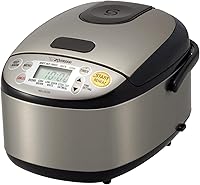
Zojirushi NS-TSC10 5.5-Cup Micom Rice Cooker Review: Worth It? (October 2026)
The Zojirushi NS-TSC10 suits households that want everyday rice cooking plus steaming in a 5.5-cup uncooked cooker. Choose the NS-ZCC10 for its named rice menus, or the NS-TSC18 for larger batches.
On this page (9 sections)
- What does the Zojirushi NS-TSC10 offer?
- How does fuzzy logic affect rice cooking?
- How much rice fits in a 5.5-cup cooker?
- What can you cook with the NS-TSC10?
- NS-TSC10 vs NS-ZCC10 vs NS-TSC18
- What should you check before buying?
- How should you set up the first batch?
- How do you care for the pot and avoid common mistakes?
- Is the Zojirushi NS-TSC10 worth choosing?
The Zojirushi NS-TSC10 is a good fit if you want regular rice meals and occasional steaming from one cooker. Its fuzzy logic controls and serving-time features suit a kitchen where rice is a routine part of dinner.
Choose it for the way you'll use it each week: cooking a suitable batch, holding rice until serving and steaming food with the included basket. A household that needs bigger batches or more specific rice menus has better options below.
What does the Zojirushi NS-TSC10 offer?
The NS-TSC10 combines rice cooking, a Steam menu and flexible serving options in a mid-size appliance. Its main appeal is a useful set of everyday functions without moving to a larger cooker.
Zojirushi NS-TSC10 Micom Rice Cooker

- 5.5-cup uncooked capacity
- Micro computerized fuzzy logic
- Steam menu setting
- Automatic and extended keep warm
Choose this Micom cooker for regular rice meals and separate steaming tasks. Delay settings and keep-warm options help you plan around different serving times.
Pros
- Fuzzy logic adjusts cooking
- Steam menu and included basket
- Two delay time settings
- Retractable power cord
Cons
- Capacity limits larger batches
- Inner pot requires hand washing
Automatic keep warm handles the change from cooking to serving, while extended keep warm and a reheating cycle offer other ways to manage a meal. Follow Zojirushi's instructions for which mode suits the rice and how long to use it.
The 2 delay time settings are useful when you have regular meal times. Check whether a timer setting refers to completion time before programming it, and use delayed cooking only with ingredients and menus the manual allows.
LCD controls show the cooker's settings, and you can choose a melody or beep signal. The retractable cord helps with storage, while the clear-coated stainless steel exterior can be wiped down after cooking.
Who should consider the Zojirushi NS-TSC10?
Buy it if your usual rice batches fit its capacity and you'll use the steaming basket. It makes sense for someone who wants rice ready around dinner rather than watching a saucepan.
Skip it if hand washing the pot would stop you from using it regularly. Also look elsewhere if your main need is a very small appliance, frequent large batches or a specific rice program that you haven't confirmed for this model.
How does fuzzy logic affect rice cooking?
Fuzzy logic lets a cooker adjust temperature and cooking time during a cycle. It helps manage the cooking process, but correct rice measurement and water levels still matter.
Think of it as control over the heating process rather than permission to ignore preparation. Using the wrong cup or choosing an unsuitable menu can still leave you with a texture you don't want.
The NS-TSC10 uses micro computerized fuzzy logic, while the NS-ZCC10 uses Neuro Fuzzy logic. Our explanation of what fuzzy logic means in a rice cooker covers the basic approach.
Choose between these models by menu, batch size and kitchen fit before focusing on the technology name. The Micom vs Neuro Fuzzy guide helps put those labels in context.
How much rice fits in a 5.5-cup cooker?
The NS-TSC10 holds up to 5.5 cups of uncooked rice, or 1.0 liter. This is a measure of dry rice, so leave room in your meal plan and storage containers for the larger cooked batch.
Use the supplied rice measuring cup rather than a standard kitchen cup. The pot's water markings and cooking instructions depend on the intended rice measure.
Capacity also varies by grain and recipe, so don't treat the maximum as permission to fill every menu to the same level. Porridge and mixed dishes need the limits given for that use.
For household sizing, start with how much dry rice you actually cook for a normal meal. Appetites, side dishes and plans for leftovers make a fixed servings claim less useful than your own batch measurement.
If your regular amount exceeds the smaller cooker's limit, the NS-TSC18 Micom cooker is the relevant step up. Don't choose it just for a rare gathering unless you're comfortable giving it counter space all year.
For help relating portions to household needs, use the guide to choosing a rice cooker size for your family. Check the permitted minimum batch too if you often cook for 1 person.
What can you cook with the NS-TSC10?
The NS-TSC10 can cook rice, steam food and bake cakes using its cooking functions. Treat the Steam and Cake menus as separate uses with their own instructions.
The basket is useful for steaming vegetables or other suitable foods without bringing out a separate steamer. Leave space around the food, add the required water and keep the steam outlet clear.
Don't assume you can place the basket over any rice batch and cook both foods together. Use only combinations and amounts allowed in the manual, since the water, timing and available space must suit both foods.
For cakes, start with a recipe written for the cooker rather than transferring an oven recipe unchanged. Batter quantity and cooking method need to fit the pan and menu.
If sushi rice, porridge or different white rice textures are your main reason for buying, compare the NS-ZCC10 Neuro Fuzzy review. Its named menus make it a more direct match for that shopping priority.
NS-TSC10 vs NS-ZCC10 vs NS-TSC18
Choose the NS-TSC10 for rice plus steaming, the NS-ZCC10 for its rice menu choices, or the NS-TSC18 for larger batches. Capacity and the functions you'll use matter more than choosing the model with the most options.
| Model | Maximum uncooked capacity | Main reason to choose it | Size (W x D x H) | Electrical rating |
|---|---|---|---|---|
| NS-TSC10 | 5.5 cups / 1.0 L | Rice cooking and steaming | 10-1/8 x 14 x 8-1/2 in | 120 V / 610 W |
| NS-ZCC10 | 5.5 cups | Named rice and texture menus | 10-1/8 x 13 x 8-1/8 in | 120 V / 680 W |
| NS-TSC18 | 10 cups / 1.8 L | Frequent larger batches | 11.12 x 15 x 9.87 in | 120 V / 820 W |
Should you pick the NS-ZCC10 instead?
Pick the NS-ZCC10 if you regularly cook different rice dishes or prefer texture choices. Its menus include regular or sushi white rice, softer or harder white rice, mixed rice, porridge, sweet rice, semi-brown, brown, rinse-free and quick cooking.
That range gives you a clearer menu match when your meals change through the week. Its spherical nonstick pan, washable inner lid and keep-warm functions also suit regular rice preparation.
Skip this alternative if your main reason to switch is needing more rice at once, since it adds no batch capacity. If steaming is central to your plans, keep the NS-TSC10 in focus and read the NS-TSC10 vs NS-ZCC10 comparison.
When does the NS-TSC18 make more sense?
Choose the NS-TSC18 when larger batches are a weekly need. It suits group meals and households that deliberately cook enough rice for several portions of leftovers.
Its fuzzy logic, delay settings and serving functions keep the focus on routine rice cooking. The reason to choose it over the smaller model is room for more rice, rather than an assumption that bigger means better cooking.
Skip it if you usually make small amounts and have limited counter space. Before buying, confirm that its permitted batch range covers your smallest common meal as well as your largest one.
What should you check before buying?
Check counter space, batch size and cleaning habits before committing to the NS-TSC10. A cooker that fits your routine is more useful than extra functions you rarely select.
Measure the counter against the dimensions above, then allow room to open the lid and lift out the pot. Closed height alone doesn't show whether the cooker will be convenient under a cabinet.
Choose a stable, level location with room for steam to escape according to the manual. Keep the controls accessible so you can read the display without moving a hot appliance.
If you plan to store it after each meal, consider the 9.5-pound weight and the space needed to lift it out. The cord retracts, but you still need a practical place for the cooker and its accessories.
The models here are rated for 120-volt power, so check suitability for your location. Zojirushi backs the NS-TSC10 with a 1-year warranty; review the terms that apply in your region.
If you haven't settled on this style of appliance, the broader best rice cookers guide helps compare it with other choices.
How should you set up the first batch?
Start with plain rice and careful measurements so you have a useful baseline. Save added ingredients and recipe changes until you understand the basic process.
- Read the setup instructions and remove any packing material from the cooker and accessories.
- Wash the food-contact parts as directed, then dry them before assembly.
- Measure rice with the included cup and rinse it if the rice and recipe call for rinsing.
- Add water using the correct menu markings and the manual's method.
- Check that the outside of the pot and its contact area are clean and dry before inserting it.
- Select the appropriate menu, close the lid and start the cycle.
Avoid repeatedly opening the lid while rice cooks, since that releases heat and steam. When the cycle ends, follow any resting instructions and fluff the rice with the supplied spatula before serving.
If the texture needs work, change one thing next time, such as a small water adjustment within the instructions. Changing the rice amount, water and menu together makes it harder to find the cause.
The Zojirushi rice cooker use guide offers more help with measuring, controls and the cooking routine.
How do you care for the pot and avoid common mistakes?
Hand wash the nonstick pot gently and clean food residue after each use. Careful handling protects the surface and keeps old rice from affecting the next batch.
Let the pot cool, then use mild dish soap and a soft sponge. Soak stuck rice rather than scraping it with a metal utensil, and dry the outside before returning the pot to the cooker.
Unplug the appliance before cleaning the body, and never immerse it in water. Follow the manual for removing and cleaning lid parts, vents and other components.
These habits prevent common problems:
- Keep the rice cup with the cooker. Substituting another measure throws off the relationship between rice and water.
- Use the right fill limit. The maximum rice capacity doesn't apply to every grain or recipe.
- Keep the heating area clear. Remove stray grains and moisture before seating the pot.
- Use suitable utensils. The included spatula avoids the need to serve rice with a metal spoon.
- Handle leftovers promptly. Transfer rice for storage using suitable food-safety guidance rather than leaving it in a switched-off cooker.
Reheat and keep warm serve different purposes, so use each according to Zojirushi's directions. Don't treat either function as a way to recover rice that has been stored improperly.
Is the Zojirushi NS-TSC10 worth choosing?
Choose the Zojirushi NS-TSC10 if your normal batch fits and steaming earns its place in your kitchen. It suits a buyer who wants rice cooking and useful meal-timing controls in one appliance.
Pick the NS-ZCC10 when its named rice menus match dishes you make often. Pick the NS-TSC18 when your regular meals exceed the smaller cooker's capacity.
Before ordering, measure one usual batch of dry rice and the counter where the cooker will sit. Then use the best Zojirushi rice cookers guide if you still need a different size or feature mix.
Frequently asked questions
How much rice can the Zojirushi NS-TSC10 cook?
The NS-TSC10 holds up to 5.5 cups of uncooked rice, or 1.0 liter. Measure with the supplied rice cup, then follow the manual's limits for your grain and menu, since the maximum white rice capacity is not a universal limit for every recipe.
Does the Zojirushi NS-TSC10 have a steam setting?
Yes, the NS-TSC10 has a Steam menu and includes a steaming basket; follow the manual for water amounts, basket placement and timing, and leave space for steam to move around the food. Don't assume the basket lets you steam over every rice cycle.
What is the difference between the NS-TSC10 and NS-TSC18?
Capacity is the main reason to choose between them: the NS-TSC10 holds up to 5.5 cups uncooked, while the NS-TSC18 holds up to 10 cups. Both have fuzzy logic and keep-warm options, so choose the larger model when your regular batches require the extra room.
Can you put the NS-TSC10 inner pot in the dishwasher?
Hand wash the NS-TSC10 inner pot with a soft sponge and mild dish soap; let it cool before cleaning, and avoid metal tools or abrasive pads on the nonstick surface. Follow the manual for removable parts, and use the rice cooker cleaning guide to build a routine.