7 Best Japanese Rice Cookers (October 2026)
The best Japanese rice cookers include the Zojirushi 3-Cup Micom Rice Cooker for small households, the Zojirushi NS-ZCC10 Neuro Fuzzy Rice Cooker for rice variety, and the Zojirushi Neuro Fuzzy 10-Cup Rice Cooker for shared family meals.
On this page (9 sections)
- How we chose the best Japanese rice cookers
- Best Japanese rice cookers for different needs
- Which capacity fits your kitchen?
- Do you need fuzzy logic and multiple menus?
- How should you choose among Japanese brands?
- How do you set up a Japanese rice cooker?
- How do you keep the pot and lid clean?
- Which common mistakes should you avoid?
- How to decide on the best Japanese rice cooker
The best Japanese rice cooker for small households is the Zojirushi 3-Cup Micom, with support for small portions and dedicated grain settings. Choose the Zojirushi NS-ZCC10 Neuro Fuzzy if you need larger everyday batches and more control over rice texture.
Start with how much rice you actually cook, then choose the menus you'll use each week. A bigger pot or longer feature list won't help if you mostly make a small bowl of white rice.
For more brand comparisons, see our guide to Zojirushi, Cuckoo and other rice cooker brands. If you already know you want Zojirushi, our best Zojirushi rice cookers page narrows the options to that brand.
Our picks at a glance
-
1

-
2
-
3
 Best for shared family meals
Zojirushi Neuro Fuzzy 10-Cup Rice Cooker
8.7/10 our score
See it on Amazon
- 4
 Check it
Zojirushi NS-TSC10 Micom Rice Cooker
Best for steaming meals - 5
 Check it
Toshiba Mini 3-Cup Rice Cooker
Best for small varied meals - 6
 Check it
Toshiba OriginTaste 5.5-Cup Rice Cooker
Best for varied family cooking - 7
 Check it
Tiger JNP-0550 3-Cup Rice Cooker
Best for simple daily rice
How we chose the best Japanese rice cookers
We prioritized useful batch sizes, relevant rice menus and practical daily care. The compact Micom leads because its small-portion support and grain settings give small households clear reasons to choose it.
The scores reflect those features and each cooker's fit for a specific routine. The order doesn't mean every household should buy the first model; someone feeding more people should start with the larger rice-focused options.
We also considered timers, warming functions, removable cleaning parts and storage features. These affect daily use more directly than a long menu of dishes you rarely prepare.
Capacity figures need care because cooked and uncooked amounts are different. If batch size is your main concern, our rice cooker size guide for a family of 4 explains how to compare capacity before you buy.
| Product | Best for | Capacity | Cooking focus | Convenience | Our score |
|---|---|---|---|---|---|
| Zojirushi 3-Cup Micom Rice Cooker | small households | 3 cups | Small portions, steel-cut oatmeal, brown rice, long-grain white rice | Retractable cord, fold-down handle | 9.1 |
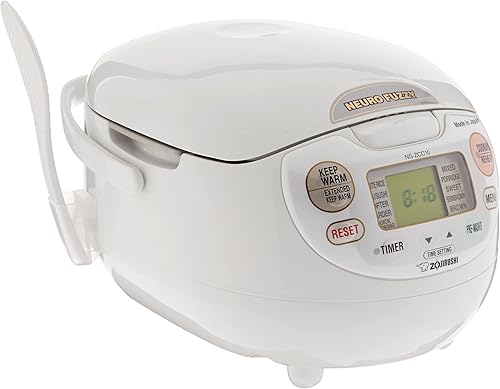
| Zojirushi NS-ZCC10 Neuro Fuzzy Rice Cooker | rice variety | 5.5 cups uncooked | White, sushi, mixed, porridge, sweet, semi-brown, brown, rinse-free, quick | Delay timer, keep-warm, reheat, retractable cord | 8.9 |
| Zojirushi Neuro Fuzzy 10-Cup Rice Cooker | shared family meals | 10-cup designation; verify uncooked amount | White, brown, rinse-free, sushi, porridge, sweet, semi-brown | Two delay starts, automatic and extended keep-warm | 8.7 |
| Zojirushi NS-TSC10 Micom Rice Cooker | steaming meals | 5.5 cups uncooked | Rice, steam menu, cake menu | Delay timer, keep-warm, reheat, retractable cord | 8.6 |
| Toshiba Mini 3-Cup Rice Cooker | small varied meals | 3 cups uncooked | White rice, quick cook, brown rice, mixed grain, slow cook, porridge | Delay timer, keep-warm, reheat, removable steam parts | 8.5 |
| Toshiba OriginTaste 5.5-Cup Rice Cooker | varied family cooking | 5.5 cups uncooked | White rice, brown rice, jasmine rice, mixed grain, porridge, cake, egg | LCD display, delay timer, keep-warm, removable steam parts | 8.1 |
| Tiger JNP-0550 3-Cup Rice Cooker | simple daily rice | 3 cups dried rice | Conventional one-button rice cooking | Automatic keep-warm, retractable cord, removable inner lid | 7.0 |
Best Japanese rice cookers for different needs
Choose the compact Micom for small portions, the NS-ZCC10 for varied rice meals, or the NS-TSC10 when steaming matters. Toshiba suits cooks who want broader meal options, while Tiger keeps the controls simple.
Our top Japanese rice cooker: Zojirushi 3-Cup Micom Rice Cooker
Zojirushi 3-Cup Micom Rice Cooker
- 3-cup capacity
- Cooks as little as 1/2 cup of rice or oats
- Dedicated grain settings
- Retractable cord and fold-down handle
Choose this compact Micom for small portions and a routine that includes rice and steel-cut oatmeal. Its dedicated long-grain white setting also suits households that switch between rice varieties.
Pros
- Supports portions as small as 1/2 cup
- Separate settings for several grains
- Cord and handle simplify storage
Cons
- Limited room for large batches
- Inner pot needs hand washing
The compact Micom suits couples, solo cooks and small households that don't want to make extra rice just to fill a pot. Its ability to cook as little as 1/2 cup of rice or oats is the strongest reason to choose it.
Separate menus cover steel-cut oatmeal, brown or GABA brown rice, and long-grain white rice. That makes it useful if breakfast and dinner involve different grains, rather than the same white rice every day.
The GABA brown cycle includes a 2-hour activation stage before cooking, so plan ahead when using it. Choose the regular brown rice menu when that longer process doesn't fit your schedule.
A fold-down handle and retractable cord help if the cooker lives in a cabinet between meals. Skip this model if you routinely need generous leftovers or host rice-heavy dinners, because its compact capacity leaves less room to grow.
Zojirushi NS-ZCC10 Neuro Fuzzy Rice Cooker
- 5.5-cup uncooked capacity
- White rice texture choices and sushi setting
- Automatic and extended keep-warm
- Two delay timer settings
A rice-focused choice for households that want more capacity and several texture options. Its washable inner lid and warming functions also suit regular use.
Pros
- Softer and harder white rice options
- Automatic, extended keep-warm and reheat cycles
- Detachable washable inner lid
Cons
- More menu choices than a basic rice routine needs
- Larger footprint than the compact Micom
The NS-ZCC10 is the stronger choice for households that cook rice often and care about texture choices. Its white rice menu includes regular/sushi, softer and harder options, alongside settings for mixed rice, porridge and other rice types.
That gives you a useful starting point when one person prefers firmer grains and another wants softer rice. Pick the closest menu first, then make small water adjustments within the manual's guidance.
The 5.5-cup uncooked capacity offers more room than the compact Micom for shared meals and leftovers. Automatic and extended keep-warm, reheat cycles and 2 delay timer settings also help when dinner timing varies.
Skip it if you want only a simple switch or specifically need a steaming basket. Read our fuzzy logic rice cooker buying guide for more on computerized controls, or Micom vs Neuro Fuzzy for the differences between Zojirushi's lines.
Zojirushi Neuro Fuzzy 10-Cup Rice Cooker
- Neuro Fuzzy temperature and time adjustments
- Several rice and porridge menus
- Pan with stay-cool side handles
- Detachable washable inner lid
Consider this Neuro Fuzzy for shared meals where warming options and pan handles matter. Confirm its uncooked capacity before choosing it for a specific batch size, because the capacity descriptions conflict.
Pros
- Pan has stay-cool side handles
- Inner lid removes for washing
- Fold-down handle and retractable cord
Cons
- Conflicting cooked and uncooked capacity descriptions
- Needs more counter space than the smaller options
Consider the NS-ZCC18 for shared family meals where warming flexibility and pan handling matter. Its rice menus include white, brown, rinse-free and sushi options, plus porridge, sweet and semi-brown settings.
Neuro Fuzzy adjusts cooking temperature and time, while automatic and extended keep-warm support meals served in stages. The spherical pan has stay-cool side handles, giving you designated grip points when moving it as directed.
The capacity wording conflicts: this model carries a 10-cup designation, but another description refers to cooked output. Confirm the exact uncooked capacity with Zojirushi before choosing it for a required batch size.
Its detachable inner lid helps with cleaning, and the fold-down handle and retractable cord simplify storage. Skip it if your normal batch is small or your counter is tight; the body measures 14.25 in deep by 11.13 in wide.
Zojirushi NS-TSC10 Micom Rice Cooker
- 5.5-cup uncooked capacity
- Steam menu and included basket
- Automatic and extended keep-warm
- Two delay time settings
Choose the NS-TSC10 if you want a rice cooker that also provides a steam menu and basket. It combines those extra cooking options with warming and scheduling functions.
Pros
- Steaming basket included
- Automatic, extended keep-warm and reheat
- Clear-coated stainless steel exterior
Cons
- Inner pot needs hand washing
- Steaming extras add little if you only make rice
Choose the NS-TSC10 if you want rice cooking and a steam menu in the same appliance. The included steaming basket gives that extra function a clear purpose for cooks who regularly steam vegetables or other suitable foods.
Follow the manual's food quantities, water amounts and timing for steaming. Don't assume you can combine a full rice batch with a full basket or use the same program for every food.
Its warming and reheat functions suit a household where rice may be ready before the rest of dinner. The clear-coated stainless steel exterior is also useful for wiping away routine splashes.
Skip it if steaming would go unused and the NS-ZCC10's rice texture choices matter more to you. Our NS-TSC10 rice cooker review takes a closer look at its features and how it compares with the NS-ZCC10.
Toshiba Mini 3-Cup Rice Cooker
- 3-cup uncooked capacity
- Eight cooking functions
- Rice, mixed grain, slow cook and porridge options
- 24-hour delay timer
This compact Toshiba suits small households that want rice, grains and slow-cooked dishes from one appliance. Its broad menu makes more sense when you plan to use it beyond plain rice.
Pros
- Several cooking modes beyond rice
- Delay timer up to 24 hours
- Removable steam valve and vent cap
Cons
- Limited capacity for guests or meal prep
- Nonstick pot needs gentle hand washing
The Toshiba Mini suits a small household that wants more than plain rice from a compact appliance. Its 8 cooking functions include white rice, quick cook, brown rice, mixed grain, slow cook and porridge.
Choose it if those extra modes replace a real cooking task, such as making breakfast porridge or a small slow-cooked dish. They add less value if you'll leave the machine on the white rice setting every time.
A large LED display supports programming, and the delay timer can schedule cooking up to 24 hours ahead. Use delayed cooking only with ingredients and holding times allowed in the manual, rather than treating the timer as permission to leave any meal unrefrigerated.
The removable steam valve and vent cap provide access for routine cleaning. Skip this model if you often cook for guests or want several days of rice from one batch, since its 3-cup uncooked capacity limits output.
Toshiba OriginTaste 5.5-Cup Rice Cooker
- 5.5-cup uncooked capacity
- 15 cooking functions
- 3D heating technology
- 24-hour timer and keep-warm
Choose the OriginTaste for family batches and a menu that extends to porridge, cake and egg dishes. Allow enough space above the cooker to open its lid and release steam.
Pros
- Broad menu of 15 functions
- Dedicated jasmine rice option
- Removable steam valve and vent cap
Cons
- Tall body needs overhead clearance
- Inner pot isn't dishwasher safe
The OriginTaste suits households that want family-sized batches and a broad cooking menu. Its 15 functions include jasmine rice, brown rice, mixed grain, porridge, cake and egg options.
A dedicated jasmine setting is useful if that is a regular part of your meals. Choose this model for the dishes you expect to make, rather than assuming more programs will improve every bowl of rice.
It uses 3D heating technology and a 3.1 mm thick inner pot with a nonstick ceramic coating. Protect that coating with suitable utensils and gentle cleaning; pot thickness doesn't remove the need for careful handling.
The body measures 11.26 in high before allowing room to open the lid. Skip it if you need a low appliance under a shelf, mostly cook tiny portions or prefer fewer menu choices.
Tiger JNP-0550 3-Cup Rice Cooker
- 3-cup dried-rice capacity
- Single push-button operation
- Keep-warm up to 12 hours
- Removable inner lid
The Tiger suits a small household that wants plain rice with minimal controls. Choose a computerized model instead if dedicated grain menus or scheduled cooking are priorities.
Pros
- Simple single-button controls
- Tiger states this model is made in Japan
- Removable inner lid and retractable cord
Cons
- No broad electronic cooking menu
- Inner pot needs hand washing
The Tiger JNP-0550 suits someone who wants simple daily rice with one button. It holds up to 3 cups of dried rice, yielding about 6 cups cooked, without a broad electronic menu to work through.
Tiger identifies this model as made in Japan, which matters if manufacturing origin is part of your decision. A Japanese brand name alone doesn't establish where every model is made.
The cooker switches to keep-warm automatically, with a stated duration of up to 12 hours. That is a convenience feature, rather than a reason to hold every batch for the full period.
Its removable inner lid and retractable cord help with cleanup and storage. Skip it if brown rice, porridge, texture settings or delayed cooking are central to your routine; a computerized model gives those needs a clearer place in the controls.
Which capacity fits your kitchen?
Choose capacity around your usual uncooked batch, then allow room for the leftovers you genuinely want. Don't size a daily appliance solely around the largest gathering you host each year.
Rice cooker cups and ordinary kitchen measuring cups aren't interchangeable. Use the cup supplied with the cooker so the dry rice amount matches its water marks and instructions.
For a more detailed capacity decision, use our rice cooker size guide. Household size helps, but appetite and the rest of the meal matter just as much.
Count portions before choosing pot size
Write down the dry rice amount you use for 2 or 3 normal meals. Include a rice-heavy dinner and a meal where rice is only a side dish.
Choose enough capacity for that pattern, including planned lunch portions. A couple who meal-preps may need more room than a larger household that serves rice alongside several other dishes.
Also check the minimum batch for your preferred program. A large maximum capacity doesn't establish how well a cooker fits very small portions, and limits can differ between rice, porridge and mixed-grain menus.
Measure the working space, not just the storage spot
Allow room to open the lid, remove the pot and release steam. A cooker that fits under a cabinet while closed may still be awkward to fill and serve from.
Use a stable, level surface with the steam vent clear of nearby objects. Keep the cord away from a counter edge, and don't move the appliance while it is cooking.
If you store it after every meal, consider the route between the counter and cabinet. A retractable cord helps with storage, but the cooker must cool and dry before being put away.
Do you need fuzzy logic and multiple menus?
Choose fuzzy logic for automatic cooking adjustments, and choose menus for the foods you actually make. Neither feature replaces measuring the rice and water correctly.
The complete fuzzy logic rice cooker guide explains the control system in more detail. For this decision, start with your rice varieties and the texture you prefer.
Match programs to your regular rice
A brown rice program matters if brown rice is a weekly staple. A porridge program matters if you want a much wetter result, with the correct lower fill limits for that dish.
Long-grain white rice, short-grain rice and mixed grains can need different water amounts and cooking steps. Use the menu and measuring instructions for the actual grain rather than treating every bag as the same food.
Sushi rice preparation also continues after cooking, with seasoning and cooling. A sushi setting helps select a cooking approach; it doesn't complete the whole dish for you.
Choose timing features around dinner
A delay timer is useful when you want rice ready for a planned meal. Check whether your cooker's timer sets the completion time or delays the start, since confusing those can leave dinner unfinished.
Keep-warm helps when people eat at different times, but rice texture can change during a long hold. Make the amount you need and use the manual's warming limits for the selected rice or dish.
Quick cook is useful for occasional schedule changes. Avoid assuming it follows the same soaking and cooking stages as a regular cycle or will produce an identical texture.
How should you choose among Japanese brands?
Choose by cooking style and capacity first, then compare the models within a brand. In this group, Zojirushi offers several rice-focused choices, Toshiba offers broader meal menus, and Tiger offers conventional one-button operation.
For a brand-level overview, see rice cooker brands compared. If you're weighing Zojirushi against Cuckoo, our Zojirushi vs Cuckoo comparison compares their approaches.
Separate brand preference from manufacturing origin. If a Japan-made appliance is a requirement, verify the exact model rather than assuming every cooker from a Japanese company qualifies.
You also don't need to limit the search by brand if your main goal is a certain capacity or control style. Our broader best rice cookers guide puts those needs alongside other options.
How do you set up a Japanese rice cooker?
Start with the supplied measuring cup, the correct water line and a clean, dry pot exterior. These basics make your first batch easier to assess and adjust.
Wash removable food-contact parts as directed before first use. Remove packaging, seat the inner lid and steam parts correctly, and check that the pot sits flat in the cooker.
Measure, rinse and fill in order
Measure the dry rice first, then rinse it if the rice instructions call for rinsing. Use a separate bowl when possible to avoid unnecessary wear on a coated inner pot.
Drain the rinse water before adding cooking water. Set the pot on a level surface and read the correct line at eye level, using the markings for both the rice type and measured amount.
Avoid using a universal rice-to-water ratio when the manual gives a specific method. The cooker, grain variety and selected program all affect which instructions apply.
Make one small adjustment at a time
Use the same rice, batch size and menu for your first few batches. If the texture needs adjustment, change only the water amount slightly within the manual's guidance.
Follow any instructions for resting before opening, then fluff gently with a suitable rice paddle. Note what worked so you can repeat it instead of starting from a new guess each time.
Keep hands and your face clear of escaping steam when lifting the lid. Add sushi seasoning or other finishing ingredients after cooking when the recipe directs.
How do you keep the pot and lid clean?
Clean the pot and removable steam-contact parts after use, following the model's manual. Dried starch around the lid or vent can make the next cleanup harder and leave odors.
Let the appliance cool, unplug it and remove the pot. Soften stuck rice with water rather than scraping it away, then use mild soap and a soft sponge where allowed.
Hand-wash the coated pot unless its own care instructions expressly allow another method. The Toshiba pots here require hand washing, and a wipe-clean exterior instruction doesn't apply to every removable component.
Clean detachable inner lids, valves and vent caps only as directed, then dry them before reassembly. Never immerse the cooker body or pour water into its electrical base.
For a full routine, follow our rice cooker cleaning guide. Gentle cleaning and suitable utensils protect the surface you use for every batch.
Which common mistakes should you avoid?
Avoid mixed measuring systems, overfilling and changing several variables at once. These mistakes can spoil a batch even when the cooker has automatic controls.
- Using a kitchen cup with rice cooker water lines: the rice amount may no longer match the marks.
- Filling to the white rice maximum for every dish: porridge and other programs can have lower limits.
- Leaving rinse water unmeasured: it becomes part of the cooking water and can change the result.
- Choosing the wrong menu: brown rice and porridge need their own cooking approach.
- Opening the lid repeatedly: it releases heat and steam during the cycle.
- Adding unfamiliar ingredients without guidance: oil, dairy, thickeners or foaming foods may be unsuitable for some programs.
- Using metal utensils on a coated pot: choose the supplied paddle or another utensil approved for that surface.
Don't use keep-warm as a substitute for proper leftover storage. If rice won't be eaten soon, cool and refrigerate it promptly using safe food-handling guidance.
Keep a short note of rice variety, dry amount, program and any water adjustment. That record is more useful than changing rice brands, water and settings together after one disappointing batch.
How to decide on the best Japanese rice cooker
The best Japanese rice cooker is the one that fits your normal batch and most frequent meal. Choose the smallest suitable capacity with the controls you will use regularly.
Pick the compact Micom for small portions and grain-focused breakfasts, or the NS-ZCC10 for larger rice meals and texture choices. Choose the NS-TSC10 when its steaming basket solves a regular cooking need.
Choose the Toshiba Mini for small varied meals, or the OriginTaste when you need more room and broader menus. Pick Tiger for simple daily rice, and consider the NS-ZCC18 only after resolving its capacity details.
Before ordering, write down your usual dry rice amount, 2 must-have settings and available counter space. To narrow the rice-focused options next, use our best Zojirushi rice cookers guide.
Our top 3 picks at a glance
-
1
-
2
-
3
Best for shared family meals
Zojirushi Neuro Fuzzy 10-Cup Rice Cooker
8.7/10 our score
See it on Amazon
Frequently asked questions
What is the best Japanese rice cooker for most people?
The Zojirushi 3-Cup Micom is the best Japanese rice cooker here for small households, especially those making modest portions or steel-cut oatmeal. If you regularly cook larger batches or want white rice texture choices, choose the Zojirushi NS-ZCC10 Neuro Fuzzy instead of buying the smaller model.
Are Japanese rice cookers worth choosing over basic models?
A computerized Japanese rice cooker is worth considering when you regularly use dedicated grain settings, a delay timer or extended keep-warm. A basic one-button cooker can be enough for plain rice, so choose the controls that solve a real meal-planning need rather than paying for unused menus.
What size Japanese rice cooker should I get?
Choose by your usual uncooked rice amount, with enough room for planned leftovers and occasional extra portions. A 3-cup model suits smaller batches, while a 5.5-cup uncooked model gives more room; also check the minimum amount allowed for the specific rice menu you plan to use.
Do all Japanese rice cookers use fuzzy logic?
No, Japanese rice cookers include both computerized models and conventional one-button cookers, such as the Tiger JNP-0550. Fuzzy logic allows cooking adjustments, but you should still choose the correct menu, measure with the supplied cup and follow the matching water marks for the rice you are making.
Does a Japanese rice cooker have to be made in Japan?
No, the phrase can describe a Japanese brand or cooking style without confirming the country of manufacture. Tiger identifies the JNP-0550-LF here as made in Japan; if manufacturing origin is essential to your choice, verify it for the exact model rather than relying on the brand name.


